

IIMB UG Entrance Exam Preparation: With its new full-time, residential undergraduate programs, the Indian Institute of Management Bangalore (IIMB) is poised to transform the way undergraduate education is delivered in India.
Latest Updates – Check IIM Bangalore UG Exam Analysis 2025

Beginning in the 2026–27 academic year, IIM Bangalore will offer two four-year undergraduate programs as part of the National Education Policy (NEP):
- B.Sc. (Hons) in Data Science with majors in Business and Economics
- B.Sc. (Honours) in Economics with concentrations in Data Science and Business
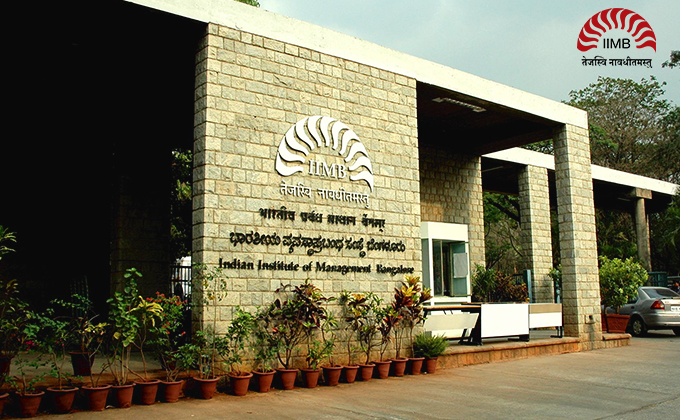
The undergraduate programs at IIM Bangalore focus on a well-rounded education that includes challenging academics, exposure to many fields, and chances to learn by doing.
Table of Contents
IIM Bangalore UG Entrance Exam Preparation Guide
The new IIMB curriculum for B.Sc. (Hons.) in Economics and B.Sc. (Hons.) in Data Science requires a targeted and calculated approach to preparation. The entrance exam is designed to evaluate students’ general awareness, verbal skills, logical reasoning, and numeric aptitude.
Here is a detailed view of experts’ suggestions about the preparation strategy revolving around the paper.
Get the LIVE IIM Bangalore UG Exam Analysis 2025
Check now →IIM Bangalore UG Entrance Exam Preparation Guide 2026
| Section | Focus Areas | Preparation Strategy | Expert Tips |
| 1. Quantitative Aptitude | – Arithmetic, Algebra, Geometry, Modern Math, Venn Diagrams – For Economics aspirants: Basic Statistics and Functions – For Data Science aspirants: Data interpretation from charts, tables, and caselets | – Practice Regularly: Solve diverse question types and focus on conceptual understanding rather than rote memorization.- Timed Practice: Attempt mock tests in timed conditions to improve accuracy and speed. – Concept Clarity: Strengthen fundamentals in number systems, ratios, and percentages. – Data Skills: Work on analyzing tabular and graphical data efficiently. | – Build a strong logic-based foundation in math problems. – Economics students: Focus more on percentages, ratios, and trend analysis. – Data Science aspirants: Sharpen data visualization and interpretation skills. |
| 2. Logical & Analytical Reasoning | – Seating Arrangements – Syllogisms – Coding-Decoding – Matrix Puzzles – Analogies – Number & Letter Series | – Understand Logic: Focus on the reasoning process instead of memorizing shortcuts. – Topic-wise Practice: Try focused mock tests and analyze errors to enhance speed and accuracy. – Pattern Recognition: Identify recurring question types and develop systematic solving approaches. | – Logical aptitude supports both data analysis and economic modelling.– Consistent reasoning practice improves decision-making and analytical clarity, crucial for both programs. |
| 3. Verbal Ability | – Reading Comprehension (Inference and Tone-based) – Grammar (Subject-verb agreement, Modifiers, Sentence Correction, Parallelism) – Vocabulary Building – Editorial Reading | – Expand Vocabulary: Use flashcards, apps, or daily quizzes. – Improve Grammar: Revise core grammar rules and sentence structures. – Active Reading: Read opinion pieces and journals like The Economist, Mint, and Harvard Business Review. – RC Practice: Focus on long-form comprehension passages with analytical reasoning questions. | – Economics aspirants: Read policy documents, research papers, and financial columns. – Data Science aspirants: Engage with analytical and tech-focused articles to understand data in context.- Strong verbal skills improve your communication and case-analysis ability. |
| 4. General Awareness (GK & Current Affairs) | – National & International Events – Economic & Tech Updates – Government Schemes – Business & Policy Trends – Static GK (Polity, Economy, Geography, History) | – Regular Updates: Follow daily news and monthly GK digests. – Reliable Sources: Read The Hindu editorials, PIB releases, and current affairs magazines. – Revision: Maintain short notes and review weekly. – Quizzes: Attempt daily and weekly quizzes for retention. | – Data Science aspirants: Track AI advancements, Big Data trends, and tech policies. – Economics aspirants: Follow RBI announcements, Union Budget insights, and IMF/World Bank reports. – Strong awareness enhances interview and essay performance. |

Study Plan for IIMB UG Entrance 2026
Understanding how to approach a relatively new paper can be challenging. Still, it can be made easier with a study plan, which covers all the important topics that need to be addressed and outlines how to cover them effectively.
Study Plan for IIMB UG 2026
| Timeline | Objective | Key Focus Areas | Action Plan & Smart Tips |
| Phase 1: Intensive Concept Revision (October) | Strengthen fundamentals and fix weak areas in all three sections before full-length mocks begin. | – Quantitative Aptitude: Arithmetic (Percentages, Ratios, Averages, Time-Speed-Distance), Algebra, Geometry, and Data Interpretation. – Verbal Ability: Reading Comprehension, Vocabulary, Grammar & Usage. – Logical Reasoning: Puzzles, Series, Coding-Decoding, and Analytical Reasoning. |
|
| Phase 2: Mock Test & Analysis Stage (November) | Transition from concept learning to exam simulation and performance tracking. | – Focus on speed, accuracy, and time management. – Build confidence in DI-based and logic-heavy quant sets. – Improve reading comprehension endurance by reading long editorials. |
|
| Phase 3: Final Exam Readiness (December) | Optimize performance with full-scale mock practice and last-mile revision. | – Focus Areas: Speed math, RC inference questions, tricky logic puzzles, and GK refreshers (if applicable). – Mindset: Exam stamina, calmness, and consistency. |
|
| Phase 4: Interview preparation (late December – January) | Prepare for the Personal Interview (PI) and Written Ability Test (WAT) soon after the exam. | – Core Focus: Personality questions, current affairs, academic background, and communication skills. – Review school-level maths, English, and GK as they’re often discussed. – Stay updated on economic and business events. |
|
| Phase 5: Post-Interview & Transition (February Onwards) | Prepare to enter your IIM journey. | – Build a foundation in Data Science, Economics, or Business basics, depending on your intended specialization. |
|
Resources for IIM Bangalore UG Entrance Preparation 2026
In order to prepare for your upcoming UG entrance, you would not only need the strategies that have been mentioned above, but also self-studying resources such as these recommended books.
Recommended Books & Resources for IIMB UG 2026
| Section | Recommended Books & Resources |
| Verbal Ability (English Language Skills) | – Objective General English – S.P. Bakshi (Arihant)- General English for All Competitive Exams – R.S. Aggarwal- High School English Grammar & Composition – Wren & Martin- Word Power Made Easy – Norman Lewis |
| Quantitative Skills (Mathematics & Data Interpretation) | – Quantitative Aptitude – R.S. Aggarwal- Fast Track Objective Arithmetic – Rajesh Verma- NCERT Mathematics (Classes 9–12)- The Pearson Guide to Quantitative Aptitude & Data Interpretation for the CAT – Nishit Sinha |
| Logical Reasoning & Analytical Ability | – How to Prepare for Logical Reasoning for the CAT – Arun Sharma- A Modern Approach to Logical Reasoning – R.S. Aggarwal- Analytical Reasoning – M.K. Pandey- Verbal & Non-Verbal Reasoning – R.S. Aggarwal |
| General Awareness (Current Affairs & GK) | – Manorama Yearbook- McGraw-Hill General Studies- Arihant General Knowledge- Daily Newspaper Reading (The Hindu, Mint, Indian Express) |
Given the competitive nature of the IIM Bangalore UG entrance exam and the emphasis on practical understanding, starting preparations early is essential. A structured approach, guided mentorship, and consistent practice can make a significant difference in performance. For students seeking clarity, expert guidance, and peer interaction, the IIM Bangalore UG Sprint Program offered by CL provide a focused pathway – covering live sessions, doubt-solving, assignments, and interview preparation – helping aspirants navigate the exam effectively while staying organized and motivated.
Students can also attempt the Free IIMB UG Mock Tests curated by the IIM Bangalore alumni to get a tentative insight into the actual test (pattern and difficulty level).
All the best,
Team CL!