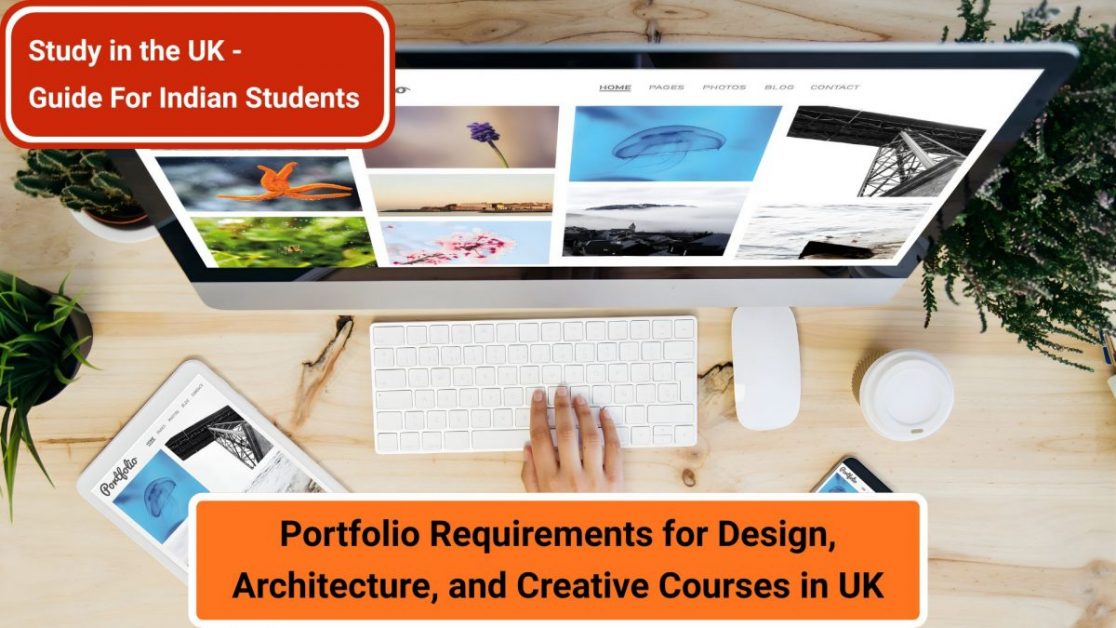
Your portfolio is not about perfection. It is about potential.
UK universities use portfolios to understand how you think, how you explore ideas, and how you develop creative solutions. They are not expecting you to be a trained designer, architect, or artist. They are looking for curiosity, originality, and a willingness to experiment and learn. This is why portfolios often matter more than grades for creative courses.
In the guide below, learn about UK portfolio requirements and see what design and architecture schools expect and how to present your creative work.
If you ever feel unsure while building your portfolio, expert guidance can help. Career Launcher’s study abroad mentors regularly support students with portfolio planning, structure, and course-specific expectations, so your work speaks clearly to UK admissions teams.
Table of Contents
What a creative portfolio really is, and what it is not
A portfolio is a curated collection of your creative work. It tells a story about you as a thinker and a maker.
According to the University of the Arts London (UAL), “It’s a collection of your work demonstrating how your creativity has developed over time. It shows your ability to work with different materials, themes and techniques, as well as how you research, develop and plan your ideas. And the mistakes you’ve made along the way.”
It is not just a gallery of finished pieces. Admissions tutors want to see how your ideas started, how they changed, and why you made certain choices. Your sketches, notes, experiments, and failed attempts are often more valuable than a polished outcome.
Whether you are applying for design, architecture, fine art, or creative media, this principle stays the same.
1. Core content every creative portfolio should include
No matter which creative field you are applying to, UK universities expect a few common elements in your portfolio.
- Showing your creative process
This is the most important part. You should include sketchbook pages, research images, brainstorming notes, concept development, and experiments. These show how you think and how you solve problems creatively. Admissions tutors want to see progression: Where did the idea start? What influenced it? How did it evolve?
2. Finished work that reflects your skills
You should include completed projects that show your strengths in your chosen area. This could be illustrations, design layouts, artworks, photographs, sculptures, or built concepts. Quality matters more than quantity. A few strong projects, well-explained, are always better than many rushed ones.
3. Digital and technical skills
UK creative courses value digital literacy. If you have used software like Photoshop, Illustrator, InDesign, CAD tools, animation software, or video editing tools, include that work. Even basic digital experiments show willingness to learn and adapt, which matters a lot.
4. Observational drawing and visual studies
Life drawing, still life, buildings, objects, or landscapes help demonstrate how you observe the world. This is especially important for architecture, fine art, and design courses. These do not need to be perfect. They need to show attention, curiosity, and practice.
5. Your unique interests
Universities want to see what excites you: personal projects, hobbies, visual diaries, or explorations that connect to your interests make your portfolio feel authentic. This is often what makes you stand out.
Architecture portfolio requirements explained clearly
Architecture portfolios often worry students the most. The good news is that universities do not expect you to submit professional architectural drawings if you are applying from school or college.
What they want is evidence of architectural thinking. You can include sketches, drawings, photography that explores space and structure, simple models, design projects, and conceptual ideas. Showing a range of scales helps, from small objects or furniture ideas to imagined buildings or spaces.
If you have worked on design projects, you can include plans, sections, elevations, or models, but always explain your thinking. Concept sketches are just as important as technical drawings.
Try to present each project as a short story. Show how the idea began, what inspired it, what challenges you faced, and how the design developed. This narrative approach is highly valued in UK architecture schools.

Portfolio expectations for art and design courses
- For art, design, illustration, fashion, or visual communication courses, universities want to see exploration across materials and media.
- You can include painting, printmaking, collage, textiles, illustration, photography, digital art, animation, or sequential storytelling. Experimentation is encouraged.
- If you are applying to a specific discipline, your portfolio should lean in that direction, but it should not feel narrow or repetitive. Showing curiosity across media suggests creative growth.
- Digital work using Adobe software, web design tools, or animation platforms is a strong addition, especially for design-focused courses.
How to present your portfolio for UK universities
- Presentation matters, but clarity matters more than style.
- Most UK universities ask for a digital portfolio, usually as a PDF of around ten to twenty pages. Always check the exact requirements on the official university website.
- Your portfolio should start with a simple cover page that includes your name, UCAS ID, and the course you are applying for. After that, group work by project or theme, not randomly.
- Each project should include short captions. Explain what the project was about, what inspired you, and what you learnt. Keep the language simple and honest.
- If you attend interviews or applicant days, some universities may ask you to bring work on a USB. Having a clean digital copy ready is always a good idea.
What admissions tutors are actually looking for
- Admissions tutors across UK creative courses consistently look for the same qualities.
- They want to see creative thinking and curiosity. They want to see how well you communicate ideas visually. They want to understand your interests and how you respond to challenges.
- Most importantly, they are looking for potential. They are not judging you as a finished artist or designer. They are asking one question: Is this student ready to grow?
- This is why work in progress, early ideas, and experiments are welcomed, even if they feel incomplete to you.
Common mistakes to avoid in creative portfolios
- Many students try to impress by overloading their portfolio. This usually backfires.
- Avoid submitting too many similar pieces. Avoid copying trends just to look impressive. Avoid leaving out process work. Avoid sending the same generic portfolio to every course.
- Each portfolio should be tailored to the programme you are applying for. Editing is crucial.
How Career Launcher can help you build a strong, creative portfolio
Building a portfolio can feel overwhelming, especially if you are applying to competitive UK universities like the University of Arts London (UAL), University for the Creative Arts (UCA), Royal College of Art (RCA), or leading architecture schools.
Career Launcher Study Abroad supports you at this exact stage. From helping you understand course-specific portfolio expectations to structuring your work, refining captions, and aligning your portfolio with your UCAS personal statement, expert guidance can make a real difference.
Your creativity stays yours. The support helps you present it clearly and confidently to admissions tutors.
Final advice before you submit your portfolio
- Do not wait for perfection. Start early. Keep experimenting. Curate thoughtfully.
- Your portfolio is your chance to show who you are as a creative thinker. When you focus on process, honesty, and curiosity, you already align with what UK universities value most.
- If you ever feel stuck, remember that you do not have to figure this out alone. With the right guidance and preparation, your portfolio can become the strongest asset in your UK university application.
Need Help Preparing a Strong Portfolio for UK University Applications?
Get expert guidance on shortlisting the right courses, reviewing your portfolio, and strengthening your overall application for UK universities.
Related Blogs You May Find Useful
- How to Shortlist UK Universities: A Step-by-Step Guide for Indian Students
- How to Apply to UK Universities: A Complete Step-by-Step Guide For Indian Students
- How to Write a UCAS Personal Statement: The Only Complete Guide Indian Students Need
FAQs
Do UK universities expect a professional-level portfolio?
No. UK universities are not looking for professional designers or architects at the application stage. They are assessing your creative potential, curiosity, and ability to develop ideas. Even rough sketches, early concepts, and experiments are valuable if they show how you think and learn.
How important are captions and written explanations in a portfolio?
Captions are extremely important. Without explanation, tutors cannot understand your thinking. Short, clear captions that explain the brief, inspiration, process, and outcome help admissions teams evaluate your design thinking and decision-making, not just visuals.
Should my portfolio match my UCAS personal statement?
Yes. Your portfolio and UCAS personal statement should support each other. If your statement talks about certain interests or inspirations, your portfolio should visually reflect them. UK universities look for consistency between what you say and what you show.
Can I submit the same portfolio to UAL, UCA, RCA, and other universities?
You can start with a base portfolio, but it should not be submitted unchanged. Each university and course has slightly different expectations. Small adjustments in project order, emphasis, or captions can significantly improve your chances.
How early should I start building my UK creative portfolio?
Ideally, you should start at least six to nine months before application deadlines. This gives you time to experiment, improve weaker areas, document your process properly, and curate thoughtfully instead of rushing close to deadlines.
Do I need a separate portfolio for each design or architecture course?
In most cases, yes. While the core work may remain similar, your portfolio should be tailored to the specific course you are applying for. Architecture, graphic design, fashion, and fine art courses look for different strengths. Small changes in project selection, captions, and emphasis can make a big difference.