
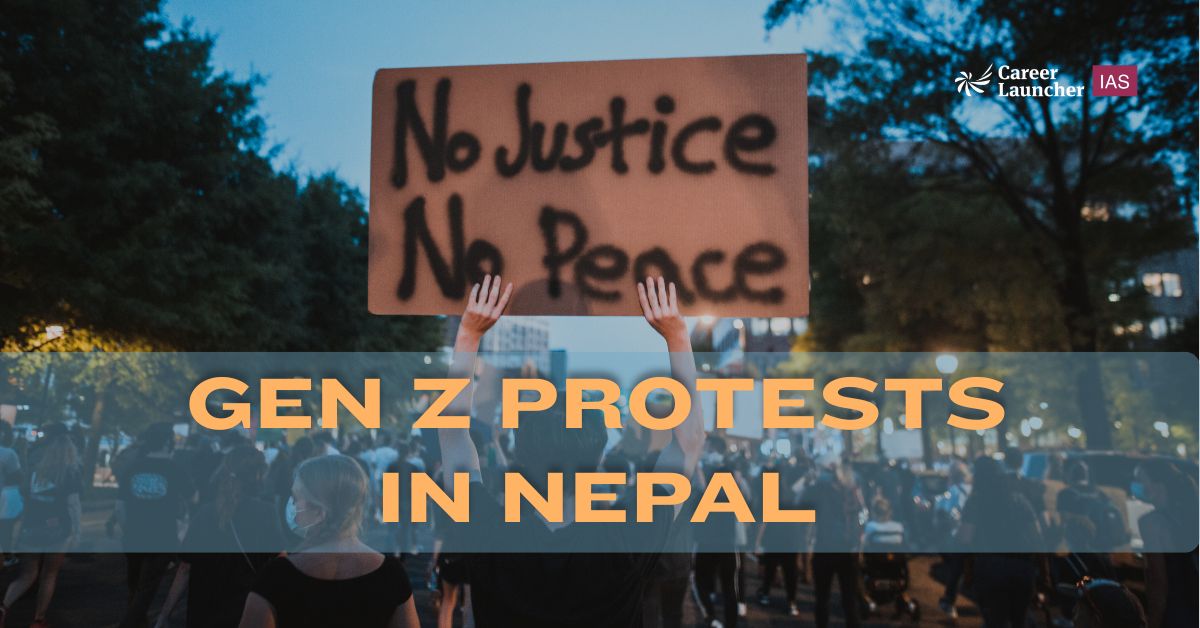
- Nepal’s President Ram Chandra Paudel has appealed for peaceful dialogue amid the ongoing Gen-Z protests triggered by political unrest following PM K.P. Sharma Oli’s resignation.
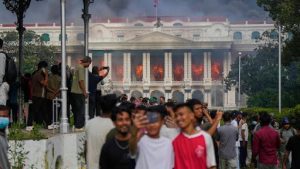
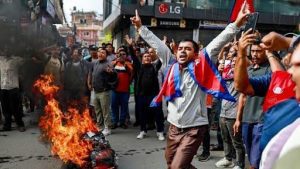
Table of Contents
What is Gen-Z Protest in Nepal?
- A mass youth-led uprising, largely by Generation Z, demanding accountability, transparency, and democratic freedoms.
What is Generation Z (Gen Z)?
- Generation Z refers to people born between the mid-1990s and early 2010s (roughly 1995–2012, though dates vary slightly in studies).
- They are the generation after Millennials (Gen Y) and before Generation Alpha.

Key Characteristics of Gen Z
- Digital Natives
- First generation to grow up with internet, smartphones, and social media from childhood.
- Highly active on Instagram, TikTok, YouTube, X, etc.
- Global Connectivity
- Exposure to global trends, movements, and ideas through digital platforms.
- More aware of diversity, climate issues, and social justice compared to earlier generations.
- Values & Priorities
- Demand accountability, transparency, and inclusivity.
- Less tolerant of corruption, nepotism, and authoritarianism.
- Strongly support climate action, gender equality, and digital rights.
- Socio-economic Context
- Many face economic insecurities: unemployment, rising costs of education, and job competition.
- Entrepreneurship, freelancing, and digital careers are attractive to them.
- Politics & Protests
- Gen Z movements are youth-driven, non-traditional, and often leaderless (e.g., climate strikes, Hong Kong protests, Gen-Z protests in Nepal).
- Tend to distrust traditional political elites.
Examples of Gen-Z Protests Worldwide
- Fridays for Future climate strikes (led by Greta Thunberg, born 2003).
- Hong Kong pro-democracy protests (2019–20) saw strong Gen Z participation.
- Gen Z protests in Nepal (2025) against corruption, nepotism, and social media bans.
Background of Nepal Crisis
- Triggered after Prime Minister K.P. Sharma Oli’s resignation and subsequent political instability.
- Immediate spark: Ban on 26 social media platforms (Facebook, Instagram, WhatsApp, YouTube, X, etc.) citing tax & cybersecurity concerns.
- Organised by Hami Nepal; participants mainly youth under 28 years.
Key Features of the Gen-Z Protest in Nepal
- Youth-led (Gen-Z): First time Nepal’s young population mobilised on a mass scale.
- Non-partisan: Organisers asked political parties & youth wings to stay away.
- Digital Rights vs State Control: Protest against censorship, curbs on press freedom, and shrinking democratic space.
- Social Anger: Highlighted issues of corruption, nepotism (“Nepo Babies”), unemployment, and lack of governance transparency.
- Casualties & Resignation: Police action caused deaths → Home Minister Ramesh Lekhak resigned on moral grounds.
Government’s Stand on the Nepal Gen-Z Protest
- Argued that platforms must register locally, appoint grievance officers, and remove flagged content.
- Claimed ban aimed at curbing cybercrimes, fake news, and unregulated profits by tech giants.
- Exempted platforms: TikTok, Viber, WeTalk, Nimbuzz, Poppo Live (already registered).
What led to the Gen-Z Protest in Nepal?
- Political churn: Same old leadership (Oli, Prachanda, Deuba) alternating in power since 2008.
- Corruption allegations against political elite.
- Economic angle: Nepal’s tourism and small businesses depend heavily on social media for marketing.
- Generational divide: Youth demand change, while political leadership remains dominated by 70+ leaders.
- Past echoes: Similar protests in March 2025 demanding return to monarchy.
Significance of Gen-Z Protest in Nepal
- Marks youth awakening in Nepal’s democratic journey.
- Poses challenge to Nepal’s fragile political stability.
- Raises questions on digital freedom vs regulation in small democracies.
- May influence India-Nepal relations, especially in trade, digital economy, and democratic cooperation
.
UPSC Prelims Multiple Choice Questions for Gen-Z Protests in Nepal
- The term “Gen-Z Protests” recently seen in news is associated with which of the following countries?
- India
- Sri Lanka
- Nepal
- Bangladesh
- Which of the following social media platforms were banned in Nepal in 2025, sparking the Gen-Z protests?
- TikTok
Select the correct answer using the code below:
- 1, 2 and 3 only
- 2 and 4 only
- 1 and 3 only
- 1, 2, 3 and 4
- With reference to Nepal’s politics, consider the following statements:
- Nepal became a democratic republic in 2008.
- The 2025 Gen-Z protests demanded the restoration of monarchy.
- The protests were organised by a group called Hami Nepal.
Which of the statements given above are correct?
- 1 and 2 only
- 2 and 3 only
- 1 and 3 only
- 1, 2 and 3
Answers
Ans 1. (c) Nepal
In 2025, Nepal witnessed youth-led protests by Generation Z, triggered by a social media ban and deep-rooted anger over corruption, nepotism, and political instability. It was the first mass mobilisation of Nepal’s Gen Z.
Ans 2. (a) 1, 2 and 3 only
Nepal banned 26 platforms including Facebook, Instagram, WhatsApp, YouTube, and X. TikTok, however, escaped the ban because it had registered with the government and complied with its rules.
Ans 3. (c) 1 and 3 only
Nepal became a democratic republic in 2008 after abolishing monarchy. The 2025 protests were not for monarchy but against corruption and social media bans, led by Hami Nepal. Earlier, in March 2025, a separate protest had demanded a return to monarchy.

UPSC Mains Basic Questions for Gen-Z Protests in Nepal
- Discuss the causes and significance of the 2025 Gen-Z protests in Nepal. (10 marks)
✔ Answer Framework:
- Introduction:
The 2025 Gen-Z protests in Nepal represent a youth-led uprising demanding accountability, transparency, and democratic freedoms. Triggered by a ban on major social media platforms, they reflect deeper issues of corruption, unemployment, and political instability.
- Body:
- Causes:
◈ Ban on 26 social media platforms (Facebook, WhatsApp, YouTube).
◈ Rising frustration with entrenched political elite (Oli, Prachanda, Deuba).
◈ Corruption, nepotism (“Nepo Babies”), and lack of governance transparency.
◈ Unemployment and poor economic opportunities.
- Key Features:
◈ Youth-led, first mass mobilisation of Gen Z.
◈ Non-partisan, independent of political parties.
◈ Protests against censorship, shrinking democratic space.
◈ Police action → deaths → resignation of Home Minister.
- Significance:
◈ Emergence of youth as a political force.
◈ Questions on digital rights vs state control.
◈ Highlights generational divide in Nepal’s democracy.
- Conclusion:
The Gen-Z protests mark a turning point in Nepal’s democratic journey by highlighting youth aspirations and accountability. Whether Nepal’s leadership engages constructively with these demands will shape the country’s political stability and democratic future.
Advanced UPSC Mains Questions
- Political instability in Nepal has often spilled over into India–Nepal relations. Critically analyse how the 2025 Gen-Z protests could influence bilateral ties.
(15 marks)
✔ Answer Framework:
- Introduction:
India and Nepal share deep historical, cultural, and economic ties. However, Nepal’s recurring political crises—from the monarchy’s abolition to frequent leadership changes—have influenced bilateral relations. The 2025 Gen-Z protests add a new dimension by highlighting youth aspirations and digital freedoms.
- Body:
- Impact on Bilateral Relations:
- Digital Economy & Trade: Social media bans hurt Nepal’s tourism and small businesses; India–Nepal digital trade and start-up linkages may also suffer.
- Political Stability: Instability in Kathmandu makes policy continuity with India difficult. Frequent leadership changes (Oli, Prachanda, Deuba) disrupt bilateral projects.
- Youth Connect: Gen-Z protests demanding transparency and anti-corruption governance may push for closer democratic alignment with India’s model.
- Security Concerns: Instability may increase China’s influence in Nepal, complicating India’s strategic interests.
- Public Perception: If India is seen as supportive of democratic freedoms, it may strengthen goodwill among Nepalese youth.
- Critical Analysis:
- Instability may create short-term policy uncertainty, but youth-driven reforms could open long-term avenues for a more accountable Nepal.
- India must balance non-interference with support for democratic values.
- Conclusion:
The Gen-Z protests underline Nepal’s generational shift, with implications for governance and India–Nepal relations. For India, engaging with Nepal’s youth aspirations while respecting sovereignty may prove vital in building resilient bilateral ties in the digital age.

UPSC Interview-Based Questions for Gen-Z Protests in Nepal
What do you understand by the term “Generation Z”?
✔ Answer:
- Gen Z refers to people born roughly between 1995 and 2012.
- They are digital natives, socially aware, and demand accountability.
- Their activism, like Nepal’s protests, reflects global youth awakening.
Why are the 2025 protests in Nepal called the “Gen-Z protests”?
✔ Answer:
- The protests were youth-led, mostly by people under 28 years of age.
- Triggered by a social media ban but rooted in frustration over corruption and nepotism.
- It is Nepal’s first major mass mobilisation by Gen Z.
How can political instability in Nepal affect India?
✔ Answer:
- Nepal is a buffer state between India and China, so instability impacts regional security.
- Economic disruptions can affect cross-border trade, migration, and tourism.
- Instability may also increase China’s influence, challenging India’s strategic interests.
Do you think banning social media is a justified step for governments?
✔ Answer:
- Governments argue it prevents fake news, cybercrimes, and security threats.
- However, it can curb freedom of expression and affect businesses dependent on digital platforms.
- A balance between regulation and democratic rights is necessary.
What lessons can Indian democracy learn from the Gen-Z protests in Nepal?
✔ Answer:
- Youth demand transparency, accountability, and inclusive governance.
- Over-reliance on old leadership without reform can trigger unrest.
- India must also strengthen digital rights, youth engagement, and anti-corruption measures.
| Also read | |||
| India’s UPI Revolution | Crimes against Women in India | National Critical Mineral Mission (NCMM) | 15th Vice President of India |