Dubai is rapidly establishing itself as one of the world's most exciting study destinations. Once known primarily as a global business hub, the emirate has transformed itself into a serious higher education destination, backed by the government's ambitious Education 33 (E33) strategy aiming for international students to make up 50% of the total student body by 2033. Student enrolment rose by 20% in 2024-25, with international enrolment growing by 29%.
With 60+ accredited universities including international branch campuses of globally ranked institutions, all programmes delivered in English, zero income tax, and a post-study environment rich with career opportunities, Dubai offers a compelling proposition for Indian students seeking a modern, globally connected education close to home.
Dubai's higher education system is built around global standards, English-language instruction, and strong industry connections. The city is home to over 60 accredited universities, including top international branch campuses, offering globally recognised degrees across business, engineering, IT, aviation, healthcare, and creative fields.
What makes Dubai particularly unique is its concentration of international branch campuses, allowing students to earn degrees from globally ranked UK, Australian, and American universities while studying in the Middle East. The city's strategic position as a global business hub, home to companies from over 200 nationalities, creates unmatched opportunities for internships, industry exposure, and graduate employment across sectors like finance, technology, logistics, hospitality, and real estate.
Add a tax-free lifestyle, a safe and cosmopolitan environment, and proximity to India, and Dubai becomes a smart and increasingly popular choice for students seeking a world-class education with real career outcomes.
Dubai is home to branch campuses of some of the world's most respected universities, including the University of Birmingham, Heriot-Watt University, Middlesex University, and the Rochester Institute of Technology. This means you can earn a degree with the same academic rigour, accreditation, and global recognition as the parent institution, while studying in one of the most dynamic cities in the world.
Every degree programme offered at universities in Dubai is taught entirely in English, eliminating the language barrier that can be a challenge in destinations like France or Germany. For Indian students in particular, this makes the academic and social transition significantly smoother, allowing you to focus entirely on your studies and career from day one.
Dubai is one of the closest international study destinations for Indian students, with flight times of just 3 to 4 hours from most major Indian cities. The UAE is also home to one of the largest Indian communities in the world, making it a culturally familiar and comfortable environment to live and study in. Indian food, festivals, and communities are woven into the fabric of everyday life in Dubai.
Dubai's economy is one of the most diversified and fastest-growing in the world, with major industries spanning finance, technology, real estate, hospitality, logistics, and retail. The city is home to the regional headquarters of hundreds of global companies, and students benefit from exceptional internship and graduate employment opportunities right on their doorstep. With no personal income tax, graduate salaries in Dubai go significantly further than in most other study destinations.
Dubai is consistently ranked among the safest cities in the world with a low crime rate and strict law enforcement, offering a modern, well-connected, and cosmopolitan lifestyle that is hard to match. Of the 41 private higher education institutions in Dubai, 37 are international campuses, creating a truly global academic community where students from over 100 nationalities study side by side. This multicultural environment enriches both your personal experience and your professional network in ways that can benefit your career for years to come.

Dubai is home to a diverse mix of government-funded public universities and internationally accredited private institutions and branch campuses, offering students a broad range of academic choices across every major field. One of the most distinctive aspects of studying in Dubai is its concentration of international branch campuses.
Universities in Dubai are broadly divided into two categories:
| QS Arab Region Rankings 2026 | University | City |
| 3 | Khalifa University of Science and Technology | Abu Dhabi |
| 5 | United Arab Emirates University (UAEU) | Al Ain |
| 23 | Zayed University | Dubai |
Note: While Khalifa University and UAEU are based outside Dubai, they are among the UAE's most prestigious public institutions and are widely considered by students applying to study in Dubai.
| QS World University Rankings 2026 | University |
|---|---|
| 76 | University of Birmingham, Dubai Campus |
| 183 | Curtin University, Dubai Campus |
| =184 | University of Wollongong, Dubai Campus |
| =287 | Heriot-Watt University, Dubai Campus |
| =423 | Murdoch University, Dubai Campus |
| =511 | University of Bradford, Dubai Campus |
| =604 | Canadian University Dubai |
| =668 | Birla Institute of Technology and Science (BITS Pilani), Dubai Campus |
| =678 | American University in Dubai |
| 851-900 | University of Dubai |
| 696 | Symbiosis International University, Dubai |
| 801-850 | Middlesex University, Dubai Campus |
| 801-850 | De MontFort University, Dubai Campus |
| 951-1000 | Rochester Institute of Technology Dubai |
| - | SP Jain School of Global Management |
| - | American University in the Emirates, Dubai |
Universities in Dubai follow a GPA-based grading system modelled closely on the American higher education framework. The system uses a 4.0 GPA scale, letter-grade notation, and credit hour-based degree structures, making UAE degrees readily understood by international graduate school admission offices and employers worldwide. Some institutions also follow a percentage-based method, especially those that follow the UK curriculum model.
Most Indian students are familiar with a percentage-based system. Here is how it roughly compares to the GPA scale used at Dubai universities:
| Letter Grade | GPA Value | Description | Equivalent Indian Percentage |
| A+ | 4.0 | Outstanding | 90% and above |
| A | 4.0 | Excellent | 85% - 89% |
| A- | 3.7 | Very Good | 80% - 84% |
| B+ | 3.3 | Good | 75% - 79% |
| B | 3.0 | Good | 70% - 74% |
| B- | 2.7 | Above Average | 65% - 69% |
| C+ | 2.3 | Average | 60% - 64% |
| C | 2.0 | Satisfactory | 55% - 59% |
| C- | 1.7 | Below Average | 50% - 54% |
| D | 1.0 | Pass | 40% - 49% |
| F | 0.0 | Fail | Below 40% |
Applying to a university in Dubai requires careful preparation of your documents well in advance. Unlike some countries, there is no centralised application system in Dubai, meaning each university has its own application portal and process. Indian students should also note that academic certificates obtained from outside the UAE must typically be attested by the Ministry of Education in India, the Ministry of External Affairs, and then the UAE Embassy before they are accepted.
| Document | Details |
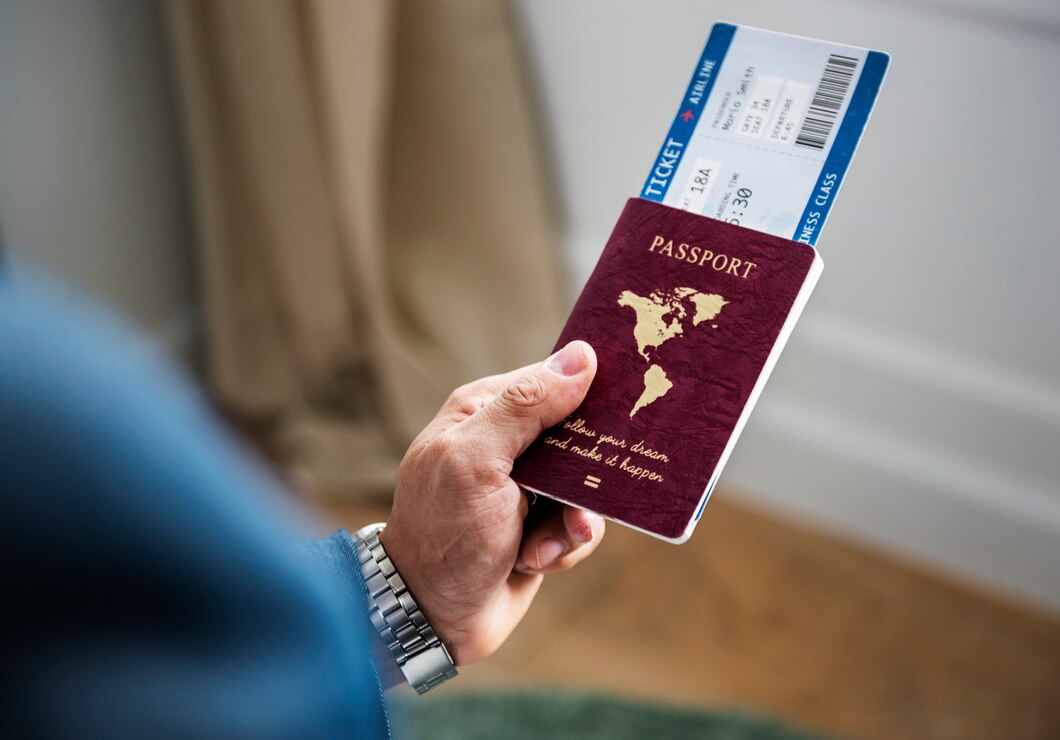
| Valid Passport | Must be valid for at least 6 months from your date of entry, with a minimum of 2 blank pages. Include a copy of the biometric/photo page. |
| Passport-Sized Photographs | Recent photographs as per the specifications of the university. |
| Completed Application Form | Submitted via each university's own online application portal. Application fees typically range from AED 100 to AED 500. |
| Academic Certificates & Transcripts | Certified and attested copies of your school leaving certificate for Bachelor's applications, or your Bachelor's degree and transcripts for Master's applications. Must be attested as required. |
| Statement of Purpose (SOP) | A written statement explaining your motivation for choosing the programme and your academic and career goals. |
| Letters of Recommendation (LOR) | Typically 2 academic or professional references depending on the programme requirements. |
| Curriculum Vitae (CV) | Required for postgraduate applications. A detailed resume outlining your education, work experience, and achievements. |
| Proof of English Language Proficiency | IELTS, TOEFL, or PTE Academic scores. Students who have completed previous education in English may be exempt at some institutions. |
| Equivalency Certificate | International students whose qualifications were obtained outside the UAE may be required to obtain an equivalency certificate from the UAE Ministry of Education. |
| Proof of Financial Resources | Evidence of sufficient funds to cover tuition fees and living expenses for the duration of your studies. |
| Standardised Test Scores (if applicable) | Some postgraduate programmes require GMAT or GRE scores. Some American-curriculum universities may also require SAT or ACT scores for undergraduate admissions. |
| Portfolio (if applicable) | Required for programmes in arts, design, architecture, fashion, or media. |
| Work Experience Evidence (if applicable) | MBA programmes at most universities require 2 to 4 years of relevant professional experience. |
Note: Document requirements vary by university and programme. Always verify the specific requirements with your chosen institution's admissions office before applying.
Getting into a Dubai university as an international student requires clearing the right set of exams depending on your chosen programme and level of study. Since all programmes in Dubai are taught entirely in English, proving English language proficiency is a mandatory requirement for almost all applicants. Some universities following the American curriculum may also require SAT scores for undergraduate admissions, while postgraduate and MBA programmes typically require GMAT or GRE scores.
| Exam | Type | Who Needs It | Minimum Score / Requirement |
| IELTS Academic | English Language Proficiency | Applicants to all programmes | Overall band score of 5.5 - 6.5 depending on the programme and institution |
| TOEFL iBT | English Language Proficiency | Applicants to all programmes | Typically 79 - 100+ (varies by university) |
| PTE Academic | English Language Proficiency | Applicants to all programmes | Accepted as an alternative to IELTS/TOEFL at select institutions |
| Duolingo English Test | English Language Proficiency | Applicants to all programmes | Accepted at select universities as an alternative English proficiency test |
| SAT | Aptitude Test | Undergraduate applicants to American-curriculum universities | Varies by institution; not universally required |
| GRE | Aptitude Test | Postgraduate applicants in Engineering, Sciences, and competitive specialised programmes | Average requirement at UAE universities is around 320 |
| GMAT | Aptitude Test | Applicants to MBA and business/management programmes | Average requirement at UAE universities is around 650 |
| EmSAT | UAE-Specific Aptitude Test | Required at public UAE universities such as UAEU and Zayed University | Scores vary by programme and institution |
Note: Some universities waive English proficiency test requirements for students who have completed their previous degree in an English-medium institution. Always verify the specific requirements with your chosen institution before registering for any exam.
Dubai offers international students a student experience unlike anywhere else in the world. A city that never stands still, it combines world-class academic infrastructure with a cosmopolitan lifestyle, a warm climate, and a safety record that is second to none.
Finding accommodation in Dubai requires early planning, particularly for the September intake when demand is at its highest. The most convenient option is university-managed student housing, with many residences offering shuttle services to campus, shared study spaces, and 24/7 security. It is strongly advisable to begin your housing search as soon as you receive your offer letter, as quality student accommodation fills up quickly.
Getting around Dubai as a student is straightforward and affordable. Dubai offers a well-connected, modern public transport system including the metro, buses, and taxis, and students can avail of discounted travel cards to reduce commuting costs. The Dubai Metro is the longest fully automated metro network in the world and connects key parts of the city efficiently. Students can apply for a student Nol Card, which offers discounted fares of up to 50% on metro, buses, and trams. Most student residences near Academic City also offer shuttle services to campus, reducing the need for daily commuting entirely.
Dubai is a cosmopolitan city with a buzzing social life. Students looking to build connections can attend career fairs, TEDx events, art shows, and citywide festivals. All major universities host a wide range of clubs, societies, sports teams, and cultural associations that make it easy to meet people and build a social circle from day one. Beyond campus, Dubai's calendar is packed with international events, food festivals, outdoor markets, and some of the world's most celebrated entertainment experiences, from the Dubai Shopping Festival to the Abu Dhabi Grand Prix just an hour away. For Indian students in particular, the city's large and well-established Indian community means cultural familiarity is never far away.
Dubai has been ranked number one globally by Numbeo in its 2025 Safety Index, making it one of the safest cities in the world for international students. The UAE has strict laws, well-policed public spaces, and advanced surveillance systems that create a genuinely secure environment for students living and studying abroad. All universities have dedicated student support services, and the Dubai student visa grants international students clear legal rights and protections throughout their stay.
Finding the right place to live is one of the most important decisions you will make before arriving in Dubai. The campuses are spread across different areas of the city, so your choice of accommodation will directly affect your daily commute, costs, and overall student experiences.
Several universities in Dubai offer on-campus or affiliated student residences that are the most convenient option for first-year students. Universities including Heriot-Watt, RIT Dubai, and Amity University offer managed housing with easy access to academic facilities. Monthly costs typically range from AED 2,500 to AED 5,500 depending on the room type.
For students whose university does not offer on-campus housing, purpose-built student residences near Dubai International Academic City are the most popular alternative. Key options include KSK Homes, The Myriad, ESAW, and Yugo Dubailand, all of which offer furnished rooms, 24/7 security, shuttle services to campus, and shared social spaces. Monthly rents typically start from AED 2,250 and go up to AED 5,000 depending on room type.
Shared apartments are the most budget-friendly option and are popular among continuing students. Areas such as Al Barsha, Dubai Silicon Oasis, and Jumeirah Village Circle offer good transport links to most campuses at more affordable rents, while Deira and Bur Dubai offer the most budget-friendly options starting from around AED 1,200 per month. Always begin your search at least 6 to 8 weeks before your semester starts.
| Accommodation Type | Estimated Monthly Cost |
|---|---|
| On-Campus / University Residence | AED 2,500 - AED 5,500 |
| Purpose-Built Student Residence (DIAC) | AED 2,250 - AED 5,000 |
| Shared Apartment (Al Barsha / DSO / JVC) | AED 2,000 - AED 4,000 |
| Budget Shared Apartment (Deira / Bur Dubai) | AED 1,200 - AED 3,000 |
| Studio Apartment | AED 3,500 - AED 7,000 |
While tuition fees at Dubai's universities are higher than at public institutions in Europe like France and Germany, a wide range of scholarships and financial aid programmes are available to help international students manage the cost. From fully funded government awards to university-specific merit scholarships, Dubai ensures that financial constraints do not stand in the way of a world-class education.
Obtain your official offer letter from an accredited university in Dubai that is recognised by the UAE Ministry of Education. Your chosen institution must be approved to sponsor student visas, as the university acts as your visa sponsor throughout your studies.
Once you have accepted your offer, your university's Student Affairs or International Office will guide you through the visa process. Submit all required documents to the university and the university will initiate the visa application on your behalf with the General Directorate of Residency and Foreigners Affairs (GDRFA).
All student visa applicants are required to undergo a medical fitness test at an approved health centre in the UAE or in their home country as directed by the university. The medical test checks for communicable diseases and is a mandatory requirement before the visa can be issued.
Valid health insurance is mandatory for all student visa holders in Dubai. Many universities arrange health insurance as part of the enrolment process, but you should confirm this with your institution. The cost of health insurance is typically included in the overall visa processing fee.
The overall cost of a Dubai student visa typically ranges from AED 3,000 to AED 7,000, covering visa processing fees, medical insurance, and related charges. Some universities cover part or all of the visa costs as part of their student support. Processing typically takes 2 to 5 weeks once all documents have been submitted.
Once your student residence visa is approved, you will need to apply for your Emirates ID, which is the official identification document for all UAE residents. You will also need to register your address and complete any remaining enrolment formalities with your university upon arrival. The student visa is typically valid for one year and must be renewed annually for the duration of your programme.
With 30+ years of experience and over 2 million+ students guided, Career Launcher Study Abroad provides end-to-end support to help you secure admits at top universities in Dubai.
Yes, Dubai is one of the fastest-growing study destinations in the world, offering globally recognised degrees from international branch campuses, an English-language learning environment, strong career opportunities, and a safe, cosmopolitan lifestyle that is particularly well-suited to Indian students.
Yes, Indian students are among the largest groups of international students in Dubai. The city's large Indian community, cultural familiarity, proximity to India, and wide range of English-taught programmes make it one of the most natural and comfortable study destinations for Indian students.
Tuition fees at Dubai universities typically range from AED 37,500 to AED 85,000 per year for undergraduate programmes and AED 50,000 to AED 100,000 per year for postgraduate programmes. Many universities offer merit-based scholarships of up to 50% that can significantly reduce the overall cost.
No. All degree programmes at universities in Dubai are taught entirely in English. Arabic is not required for academic or professional life in Dubai, though basic knowledge can be a useful asset in certain career paths.
Yes, international students can work part-time with a No Objection Certificate from their university and a work permit from MoHRE. Students are permitted to work up to 20 hours per week during term time and up to 40 hours per week during academic breaks.
After graduation, international students can apply for a one-year Graduate Visa to seek employment. Once a job offer is secured, graduates transition to an employer-sponsored Employment Visa. High-achieving graduates may also qualify for the self-sponsored five-year Green Visa or the prestigious 10-year Golden Visa.
Yes. Most universities in Dubai are international branch campuses of globally ranked institutions from the UK, USA, and Australia, meaning degrees carry the same accreditation and global recognition as those awarded by the parent institution.
Processing typically takes 2 to 5 weeks once all required documents have been submitted to the university. The university acts as the visa sponsor and manages most of the application process on your behalf.
Yes, Dubai is ranked number one globally in the Numbeo Safety Index 2025, making it one of the safest cities in the world. Students can move around freely and comfortably, and universities have dedicated support services to assist international students throughout their stay.