Overview
The Netherlands is one of Europe's most exciting and internationally minded study destinations, and its reputation continues to grow. In the 2024-25 academic year, 131,004 international degree students were enrolled in Dutch higher education, representing 16.6% of the total student population, reflecting the country's enduring appeal among students from across the world.
With more than 2,100 fully English-taught programmes, 13 universities in the global top 200, and a country where 95% of the population speaks English fluently, the Netherlands offers a study abroad experience that is both academically rigorous and remarkably accessible. If you are looking for a destination that combines world-class education, English-language programmes, and real career outcomes in one of Europe's most liveable and progressive countries, the Netherlands belongs at the top of your list.
Study in the Netherlands
The Netherlands has built one of the most internationally respected higher education systems in the world, and it shows. More than 2,100 programmes are delivered entirely in English, roughly 75% of all master's programmes and 30% of bachelor's programmes, making it the leading non-English-speaking country in the world for English-taught higher education. Dutch universities follow a problem-based, student-centred teaching approach that emphasises critical thinking, teamwork, and real-world application over rote learning, producing graduates who are highly adaptable and valued by employers globally. The country's higher education system is divided into two main tracks: research universities offering academically rigorous Bachelor's and Master's degrees, and universities of applied sciences offering more practically oriented programmes with strong industry linkages. Add a one-year post-study orientation visa, a thriving start-up and innovation ecosystem, and the headquarters of global companies like ASML, Shell, Heineken, Philips, and ING, and the Netherlands becomes not just a great place to study but a smart long-term investment in your future.
Top 5 Benefits of
Studying in the Netherlands
With over 2,000 English-taught degree programmes, the Netherlands is a top destination for international education among non-English-speaking countries. More than 95% of the Dutch population speaks English, meaning students can navigate both academic and daily life without needing to learn Dutch. This makes the Netherlands one of the most accessible European study destinations for Indian students and other non-native English speakers.
The Netherlands has 13 universities in the global top 200, yet tuition fees remain significantly lower than in the UK or the US. Non-EU international students pay fees that vary by institution and programme but are generally far more affordable than comparable programmes in Anglophone countries, making it possible to earn a globally respected degree without the financial burden associated with studying in the UK or the US.
Dutch universities are internationally recognised for their problem-based learning approach, which places students at the centre of their own education. Rather than passive lectures, you will be working in small groups, tackling real-world challenges, and developing the critical thinking, communication, and collaborative skills that employers across every industry actively look for. This practical, research-driven approach means you graduate with both strong academic credentials and hands-on experience.
After completing your studies in the Netherlands, if you are a non-EEA citizen who has completed your studies or research project in the Netherlands in the past 3 years, you are eligible to apply for the orientation year residency permit, valid for one year, which allows you to find a job as a knowledge migrant or start your own business. This structured post-study pathway gives international graduates meaningful time to establish themselves in the Dutch job market.
The Netherlands' central location in Europe means you are within two hours of major cities like London, Paris, Brussels, and Berlin. The Netherlands ranks highly on the Global Peace Index and provides a clean, safe, and sustainable environment with excellent public services. Cities are walkable and bike-friendly, and students benefit from efficient healthcare and insurance systems. The country's progressive, inclusive values and vibrant multicultural communities make it one of the most welcoming places in the world to live and study.


Top Universities in the Netherlands
The Netherlands is home to some of Europe’s most respected universities, known for their academic excellence, research output, and strong industry connections. What makes the Dutch system particularly distinctive is its two-track structure, offering both research-focused universities and particularly oriented universities of applied sciences, giving students a genuine choice in the style and focus of their education.
- 13 universities ranked in the global top 200 by QS
- Over 2,100 English-taught programmes across both tracks
- Strong global reputation, especially in engineering, business, agriculture, law and the social sciences
- Problem-based, student-centred teaching approach across most institutions
Universities in the Netherlands are broadly divided into two categories:
Research Universities (Universiteiten)
- Academically rigorous, theory and research-focused degrees
- Offer Bachelor's, Master's, and PhD programmes
- Internationally benchmarked and globally ranked
- Preferred choice for most international students seeking globally recognised qualifications
Universities of Applied Sciences (Hogescholen)
- 36 government-funded universities
- Practically oriented programmes with strong industry and vocational focus
- Offer Bachelor's and Master's degrees with mandatory internship components
- More flexible admissions for international students
- Ideal for students seeking hands-on, career-ready programmes
Explore top universities in the Netherlands below:
|
QS World University Rankings 2026 |
University |
City |
|
=47 |
Delft University of Technology |
Delft |
|
53 |
University of Amsterdam |
Amsterdam |
|
=103 |
Utrecht University |
Utrecht |
|
=119 |
Leiden University |
Leiden |
|
=140 |
Eindhoven University of Technology |
Eindhoven |
|
=140 |
Erasmus University Rotterdam |
Rotterdam |
|
=147 |
University of Groningen |
Groningen |
|
=153 |
Wageningen University & Research |
Wageningen |
|
=194 |
Vrije Universiteit Amsterdam |
Amsterdam |
|
=203 |
University of Twente |
Enschede |
|
239 |
Maastricht University |
Maastricht |
|
279 |
Radboud University |
Nijmegen |
|
=347 |
Tilburg University |
Tilburg |
Top Universities of Applied Sciences
Universities of applied sciences in the Netherlands are ideal for students looking for practically oriented, industry-focused degrees with strong internship components and direct pathways into professional careers.
|
University |
City |
|
Amsterdam University of Applied Sciences (HvA) |
Amsterdam |
|
The Hague University of Applied Sciences |
The Hague |
|
Rotterdam University of Applied Sciences |
Rotterdam |
|
Fontys University of Applied Sciences |
Eindhoven |
|
Saxion University of Applied Sciences |
Enschede / Deventer |
|
HAN University of Applied Sciences |
Arnhem / Nijmegen |
|
Inholland University of Applied Sciences |
Amsterdam / Rotterdam |
|
Windesheim University of Applied Sciences |
Zwolle |
Best Cities to Study in the Netherlands
The Netherlands packs an impressive variety of student experiences into a relatively compact country. Whether you prefer the energy of a major city or the charm of a smaller university town, there is a Dutch city that fits your academic goals and lifestyle.
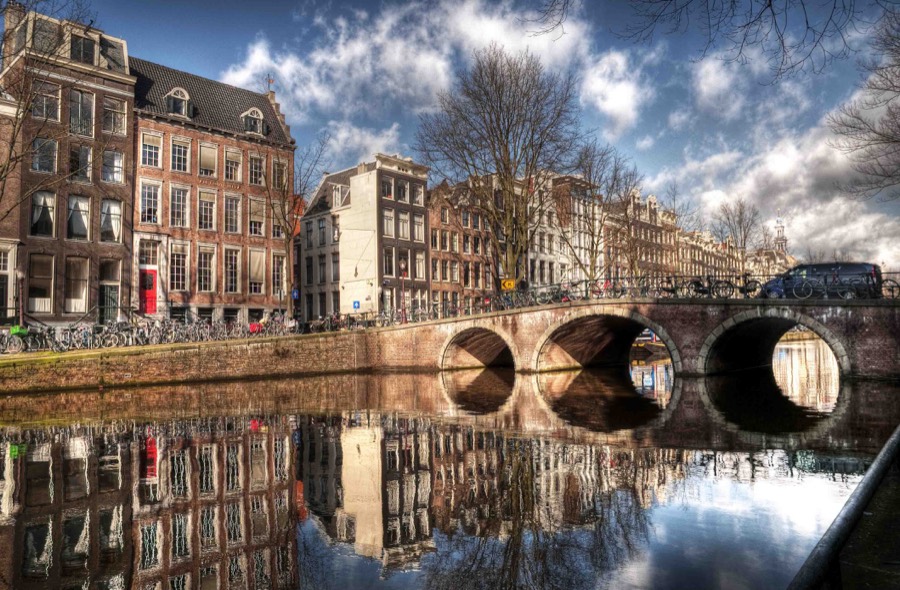
Amsterdam

Rotterdam
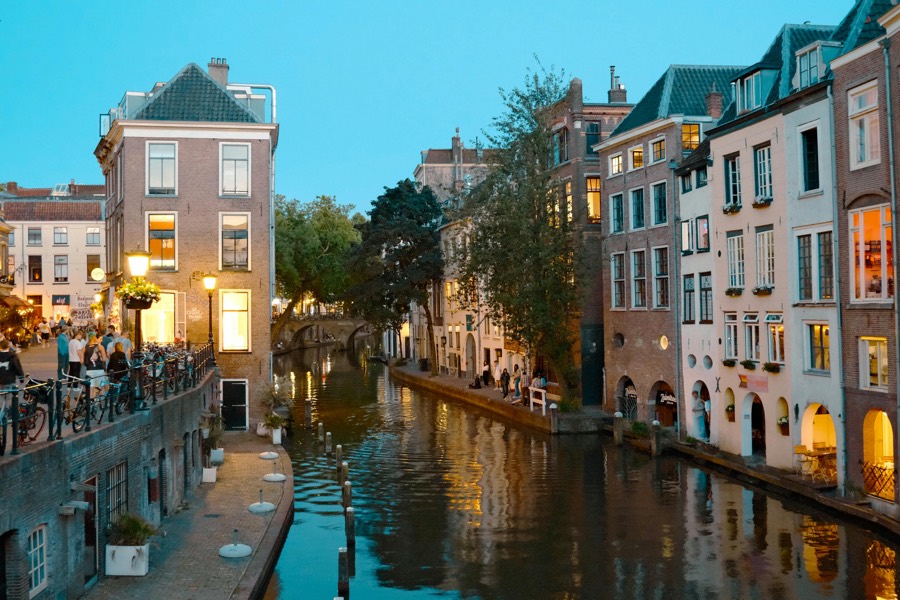
Utrecht
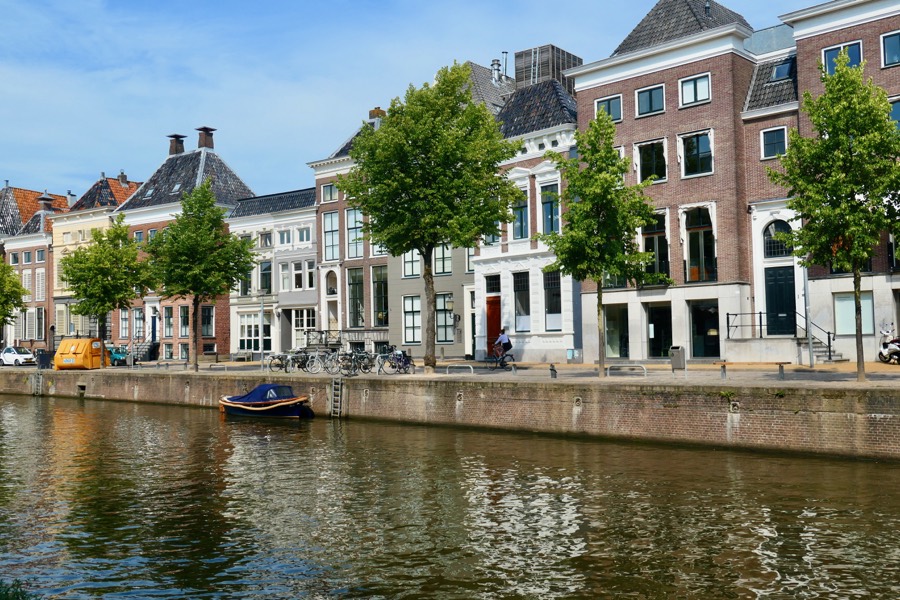
Groningen

Eindhoven
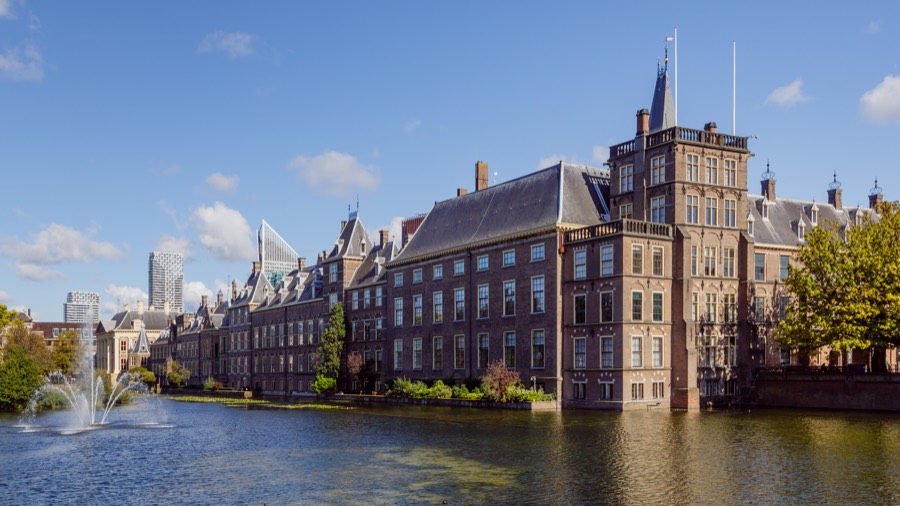
The Hague
Types of Programmes in the Netherlands

Bachelor's Degrees (WO & HBO)

Master's Degrees

Doctoral Degrees (PhD)

University College Programmes (Liberal Arts & Sciences)
Associate Degrees

Courses to Study in the Netherlands
 Engineering (Mechanical / Civil / Electrical)
Average Tuition Fees (EUR) Per Year: €6,000 – €15,000 (research university) / €5,000 – €10,000 (applied sciences)
 Computer Science / IT
Average Tuition Fees (EUR) Per Year: €6,000 – €15,000 (research university) / €5,000 – €10,000 (applied sciences)
 Business Administration
Average Tuition Fees (EUR) Per Year: €8,000 – €15,000 (research university) / €5,000 – €10,000 (applied sciences)
 Economics & Finance
Average Tuition Fees (EUR) Per Year: €8,000 – €15,000 (research university) / €5,000 – €10,000 (applied sciences)
.jpg) Law (LLB)
Law (LLB)Average Tuition Fees (EUR) Per Year: €8,000 – €15,000 (research university)
 Medicine & Health Sciences
Average Tuition Fees (EUR) Per Year: €15,000 – €25,000 (research university)
Note: Fees are for non-EU/EEA international students and vary by university and programme. Medicine and dentistry programmes typically sit at the higher end of the fee range. Always verify exact fees with your chosen institution.
 MSc Computer Science / Artificial Intelligence
Average Tuition Fees (EUR) Per Year: €10,000 – €20,000
 MBA / Executive MBA
Average Tuition Fees (EUR) Per Year: €15,000 – €35,000
 MSc Engineering
Average Tuition Fees (EUR) Per Year: €10,000 – €18,000
 MSc Data Science
Average Tuition Fees (EUR) Per Year: €10,000 – €20,000
MSc Finance / EconomicsAverage Tuition Fees (EUR) Per Year: €10,000 – €20,000
Masters in Law (LLM)Average Tuition Fees (EUR) Per Year: €10,000 – €18,000
PhD in Engineering / TechnologyAverage Tuition Fees (EUR) Per Year: €2,000 – €6,000 / fully funded positions available
 PhD in Computer Science / AI
Average Tuition Fees (EUR) Per Year: €2,000 – €6,000 / fully funded positions available
 PhD in Natural Sciences
Average Tuition Fees (EUR) Per Year: €2,000 – €6,000 / fully funded positions available
PhD in Medicine / Life SciencesAverage Tuition Fees (EUR) Per Year: €2,000 – €6,000 / fully funded positions available
PhD in Economics / BusinessAverage Tuition Fees (EUR) Per Year: €2,000 – €6,000 / fully funded positions available
PhD in Humanities / Social Sciences
Average Tuition Fees (EUR) Per Year: €2,000 – €6,000 / fully funded positions available
Note: Many PhD positions at Dutch research universities come with an employment contract, meaning candidates receive a salary rather than paying tuition fees. Always check whether a position is funded when applying for doctoral programmes.
Grading System in the Netherlands
In the Netherlands, most institutions grade exams, papers, and theses on a scale from 1 (very poor) to 10 (outstanding). This is quite different from what most international students are used to, and there is one crucial cultural distinction to understand before you arrive: the marks 9 and 10 are seldom awarded, and an average grade of 8 is considered excellent. Most grades fall between 6 and 8, so Indian students should not be discouraged by lower-looking scores, a 7 in the Netherlands is a genuinely solid result.
A minimum score of 6 is required to pass a course, and for marks with one decimal point, 5.5 is the minimum pass mark.
Here is how the Dutch grading scale compares to Indian percentages:
| Dutch Grade | Description | Equivalent Indian Percentage |
| 9 – 10 | Uitmuntend (Outstanding / Excellent) | 85% and above |
| 8 – 8.9 | Zeer goed (Very Good) | 70% – 84% |
| 7 – 7.9 | Goed (Good) | 60% – 69% |
| 6 – 6.9 | Voldoende (Satisfactory / Pass) | 45% – 59% |
| 5 – 5.9 | Bijna voldoende (Nearly Sufficient) | 33% – 44% |
| 1 – 4.9 | Onvoldoende (Insufficient / Fail) | Below 33% |
Honours Distinction
For the programme as a whole, an average mark of 8.25 or higher entitles the student to a pass cum laude (with distinction). This is the highest academic honour awarded at Dutch universities and is comparable to the summa cum laude distinction in the US system. It is awarded to only a small percentage of graduating students, making it a highly prestigious recognition of exceptional academic performance.
Intakes in the Netherlands

September Intake
The September intake is the primary intake when universities offer a wide range of bachelor's and master's programmes. During this intake, more seats are available for international students, along with a higher availability of scholarships. Applications typically open in December and close between April and May, depending on the university and programme. For Indian students graduating in May or June, the September intake is the most natural next step, allowing you to move directly into your studies without a significant waiting period.
Note: Competitive programmes with a fixed number of places, known as numerus fixus, such as Medicine, Psychology, and Dentistry, have a strict application deadline of 15 January regardless of nationality, so early planning is essential for these courses.
February Intake
The February intake is the secondary intake and can be considered if you missed the September intake. The programmes offered during this intake are more limited, with fewer scholarship opportunities as well. Application deadlines for the February intake typically fall between October and November of the preceding year. It is a practical option for students who need more time to prepare their documents, await language test results, or finalise financial arrangements. With smaller applicant pools, competition is generally lower, improving admission prospects for eligible candidates. However, Indian students in particular are advised to prioritise the September intake wherever possible, as the majority of English-taught programmes are available only in that intake.
Costing in the Netherlands
Cost of Living
The cost of living in the Netherlands varies significantly depending on the city you choose. Amsterdam is the most expensive, while cities like Groningen, Enschede, and Eindhoven are considerably more affordable. One important practical note: the Netherlands is facing a well-documented housing shortage, so finding accommodation early is essential, particularly before the September intake.
As a general guide, students in Amsterdam should plan for a monthly budget of €975 to €1,500 per month, including rent but excluding tuition fees. Students in smaller cities can generally manage on somewhat less.
| Monthly Expenditure | Estimated Cost Per Month |
| Accommodation | €650 – €1,200 |
| General Living Expenses (food, personal, etc.) | €400 – €500 |
| Health Insurance | €35 – €100 |
| Books & Study Materials | €50 – €100 |
| Public Transport (optional) | €40 – €100 |
| Total | €1,175 – €2,000 / INR 1.05L - 1.8L |
One-time costs to factor in upon arrival:
- Visa / Residence Permit (non-EU students): €254
- University Application Fee (non-EU students): €100
Cycling is the most popular and affordable mode of transport in the Netherlands, and many students skip the public transport pass entirely by using a bicycle. A second-hand bicycle typically costs €50 to €150.
Cost of Studying in the Netherlands
The Netherlands operates a two-tier tuition fee system. EU/EEA students pay a government-regulated statutory tuition fee, while non-EU international students including Indian students pay institutional tuition fees set by each university. Non-EU/EEA students pay institutional fees that vary by programme, often €10,000 to €20,000 per year at research universities. Universities of applied sciences are generally more affordable for non-EU students. MBA and specialised professional programmes sit at the higher end of the fee range.
| Programme Level | Research Universities | Universities of Applied Sciences |
| Undergraduate | €6,000 – €15,000/year | €5,000 – €10,000/year |
| Postgraduate (MSc / MA) | €10,000 – €20,000/year | €7,000 – €15,000/year |
| MBA / Executive Programs | €15,000 – €35,000/year | — |
| Doctoral (PhD) | €2,000 – €6,000/year (many fully funded) | — |
Fees shown are for non-EU/EEA international students. Medicine, dentistry, and business programmes typically sit at the higher end of the range. Many PhD positions come with employment contracts rather than tuition fees. Always verify exact fees with your chosen institution before applying.
Documents Required for University Applications in the Netherlands
Applying to a Dutch university requires careful preparation of your documents well in advance. Most applications in the Netherlands go through Studielink, the centralised Dutch application portal, which allows students to apply to multiple programmes simultaneously. Some universities may additionally require direct applications through their own portals for specific programmes. It is important to ensure all documents not originally in English or Dutch are officially translated by a sworn translator before submission. Indian students should note that credential evaluation by Nuffic may be required for non-standard qualifications.
|
Document |
Details |
|
Valid Passport |
Must be valid for at least 12 months from the date of application. Include a copy of the biometric/photo page. |
|
Passport-Sized Photographs |
Recent photographs meeting Dutch specifications as required by the university and embassy. |
|
Completed Application Form |
Submitted via Studielink for most programmes, or directly through the university portal for select programmes. Application fees of €50 to €100 may apply. |
|
Academic Certificates & Transcripts |
Certified copies of Class 10 and Class 12 certificates for Bachelor's applications, or Bachelor's degree and full transcripts for Master's applications. Must be officially translated if not in English, Dutch, German, or French. |
|
Statement of Purpose / Motivation Letter |
A written statement explaining your motivation for choosing the programme and your academic and career goals. Known as a motivation letter at most Dutch universities. |
|
Letters of Recommendation (LOR) |
Typically 1 to 3 academic or professional references depending on the programme requirements. |
|
Curriculum Vitae (CV) |
Preferably in Europass format. A detailed resume outlining your education, work experience, and achievements. |
|
Proof of English Language Proficiency |
IELTS, TOEFL, PTE Academic, or Cambridge C1/C2. Required for all English-taught programmes. |
|
Proof of Financial Resources |
Evidence of sufficient funds to cover tuition fees and living expenses. A minimum of approximately €1,050 per month is typically required. |
|
Research Proposal (if applicable) |
Required for research Master's and PhD applications. |
|
Standardised Test Scores (if applicable) |
GRE for STEM and research-oriented programmes; GMAT for MBA and business programmes at select universities. |
|
Portfolio (if applicable) |
Required for programmes in arts, design, architecture, or media. |
|
Work Experience Evidence (if applicable) |
Some MBA and professional Master's programmes require proof of relevant work experience. |
Note: Always verify the specific document requirements with your chosen university's admissions office, as requirements can vary by programme and institution.
Exam Requirement for Admission in the Netherlands
Getting into a Dutch university as an international student requires clearing the right set of exams depending on your chosen programme and level of study. Since the majority of international students enrol in English-taught programmes, demonstrating English proficiency is the most universal requirement. For postgraduate and MBA applicants, GRE or GMAT scores are additionally required at many universities. Dutch-taught programmes require proof of Dutch language proficiency through recognised certificates such as NT2 or CNaVT.
|
Exam |
Type |
Who Needs It |
Minimum Score / Requirement |
|
English Language Proficiency |
Applicants to English-taught programmes |
Minimum 6.0 for undergraduate; 6.5 – 7.0 for postgraduate programmes |
|
|
TOEFL iBT |
English Language Proficiency |
Applicants to English-taught programmes |
Typically 80 – 100+ (varies by university) |
|
PTE Academic |
English Language Proficiency |
Applicants to English-taught programmes |
Accepted as an alternative to IELTS/TOEFL at many universities |
|
Cambridge C1 / C2 |
English Language Proficiency |
Applicants to English-taught programmes |
Accepted at select universities as proof of English proficiency |
|
NT2 (Nederlands als Tweede Taal) |
Dutch Language Proficiency |
Applicants to Dutch-taught programmes |
Required for admission to Dutch-medium programmes |
|
CNaVT |
Dutch Language Proficiency |
Applicants to Dutch-taught programmes |
Accepted as an alternative to NT2 at select institutions |
|
Aptitude Test |
Postgraduate applicants in STEM, economics, and competitive specialised programmes |
Minimum 300 – 320 depending on the university and programme |
|
|
Aptitude Test |
Applicants to MBA and business/management programmes |
Typically 550 – 650+ depending on the institution |
Note: English proficiency requirements may be waived for students who have completed their previous degree entirely in English at a recognised institution. Numerus fixus programmes such as Medicine, Psychology, and Dentistry have additional selection procedures. Always verify the specific requirements with your chosen institution before registering for any exam.
Student Life in the Netherlands
The Netherlands offers international students a student experience that is progressive, well-organised, and genuinely enriching. From a student-friendly urban culture and one of the world's most bike-friendly environments to a safe and inclusive society, life as a student in the Netherlands is as comfortable as it is memorable.
Accommodation
Transport
Social Life & Campus Culture
Safety
Work Opportunities/Placements in the Netherlands

Fund your Education with Scholarships in the Netherlands
The Netherlands offers a range of scholarships for international students, from government-funded awards to prestigious university-specific scholarships. For Indian students in particular, several targeted funding options are available.

NL Scholarship (Holland Scholarship)

TU Delft Excellence Scholarship

Utrecht Excellence Scholarship

Maastricht University NL-High Potential Scholarship

Radboud Scholarship Programme

Erasmus Mundus Scholarships
Step-by-step Guide to Apply for Student Visa in the Netherlands
Your Dutch university acts as your recognised sponsor and applies for your visa and residence permit through the TEV procedure, which combines the MVV entry visa and VVR residence permit. Indian students studying for more than 90 days require both the MVV and the VVR.
Obtain your official offer letter from a recognised Dutch university and formally accept your place. Your programme must be full-time and accredited so the university can initiate the visa process.
Submit your passport, academic transcripts, proof of financial resources of approximately â¬1,130.77 per month, health insurance proof, and English test scores to your university.
Your university submits the TEV application to the IND and pays the application fee of approximately â¬171 to â¬210. Processing typically takes 60 to 90 days.
After IND approval, book an appointment at the Dutch Embassy in New Delhi or Consulate-General in Bangalore or Mumbai to provide biometrics and collect your MVV visa sticker.
Your MVV is valid for 90 days from collection. After arrival, your university will guide you through collecting your VVR residence permit from the local IND desk.
Register with the Municipal Personal Records Database (BRP) where you will study to receive your BSN, required for banking, insurance, and part-time work.

How Can We Help?
With 30+ years of experience and over 2 million+ students guided, Career Launcher Study Abroad provides end-to-end support to help you secure admits at top universities in the Netherlands.
- Profile Evaluation & University Shortlisting – Find the right-fit university and program that is best suited for your goals
- Test Prep Support – Coaching for IELTS, GRE, GMAT, and more
- Application & Documentation – SOP, LOR, CV, and complete application assistance
- Visa & Loan Counselling – End-to-end guidance for a smooth admission journey
- Post-Admission Support – Accommodation and pre-departure assistance
Student Success Story
Turning dreams into achievements

Vaibhavi Menon


Vaishnavi Menon

Kshitija Naik


Divyaansh Kataria


Saksham Soni


Akarsh Mathur


Arka Chattopadhyay

Sujay Kumar Barman


Aneesha Bahukhandi


Arjun Perazhi


Arpit Jain


Sohel Ansari


Prateeksha Shiv


Yogeshri


Anant Jain


Manish Miglani


Vinaya Sawant


Apoorva Sharma


Gufran Merchant


Akanksha Srivastava

Papasaheb Mohammad Shoeab

Bishakha Hrushikesh Praharaj


Kamaldeep Sharma

Vidya Challa


Shashank Yadav

Amandeep Singh Siledar


Srajan Bhatnagar


Akshita Gupta

Bhushan Bhale

Abhilekh Bhardwaj


Akshay Srivastava

Kumar Vivek


Vedant Puri

Raghu Chandramohan


Avi Jain

FAQs
Not for most programmes. The vast majority of international students in the Netherlands enrol in English-taught programmes and do not need Dutch for academic study. However, learning basic Dutch is helpful for daily life and can significantly improve your job prospects after graduation.
Tuition fees for non-EU international students range from €6,000 to €15,000 per year at research universities for undergraduate programmes and €10,000 to €20,000 per year for postgraduate programmes. Universities of applied sciences are generally more affordable. Living costs average €975 to €1,500 per month in Amsterdam and somewhat less in smaller cities.
The Orange Tulip Scholarship was permanently discontinued in 2024 and is no longer accepting applications. Indian students who previously planned to apply for OTS should explore the NL Scholarship, Maastricht NL-High Potential Scholarship, or university-specific awards at TU Delft, Utrecht, Radboud, and Leiden instead.
Yes, non-EU students can work up to 16 hours per week during term time and full-time during June, July, and August. Your employer must obtain a work permit on your behalf. The minimum wage is approximately €14 per hour as of 2025.
The Orientation Year (Zoekjaar) is a one-year post-study residence permit available to non-EEA graduates of Dutch universities. It allows you to remain in the Netherlands to seek employment or start a business without needing a separate work permit. It is valid for one year and serves as a pathway to a Highly Skilled Migrant visa if you secure qualifying employment.
Yes, the Netherlands is one of the most popular study destinations in Europe for Indian students. With over 2,100 English-taught programmes, world-class universities, affordable tuition compared to the UK or US, a one-year post-study work visa, and a welcoming international environment, it offers a compelling academic and career proposition.