
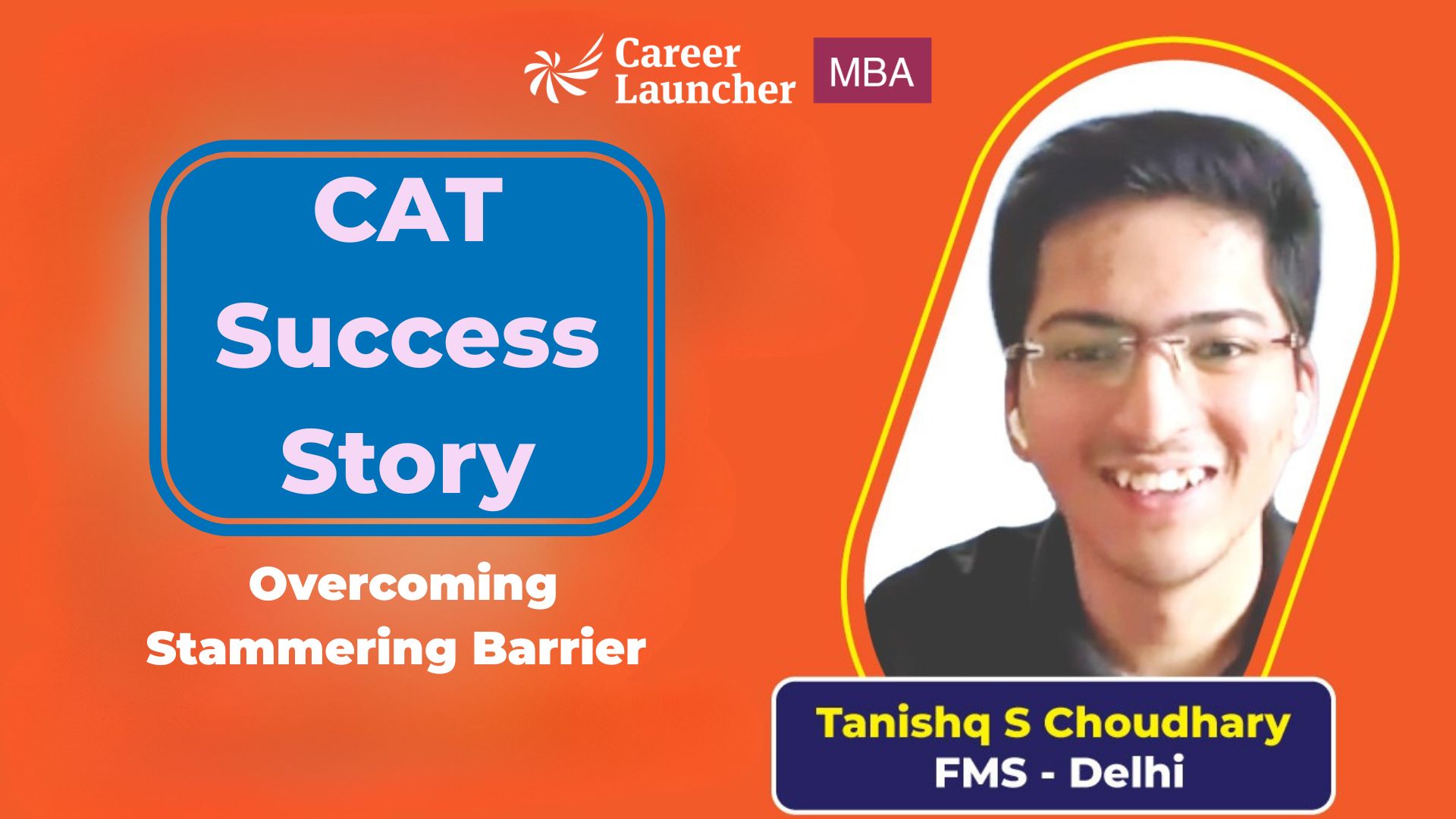
Tanishq’s CAT success story: For Tanishq, the journey from IIT Delhi to securing admits from FMS Delhi and IIM, Indore has been nothing short of transformative. As he prepares to enter B-school, he describes this phase as “much more relaxed,” with the pressure of CAT, WAT-PI, and other tests finally behind him. Now, he is simply looking forward to the first day of his MBA program, a milestone he has worked relentlessly for.
Table of Contents
Early Decision: Choosing MBA Over Placements
For many students, the choice between placements and higher studies is a difficult one. But for Tanishq, MBA was always the obvious next step.
During his fifth semester at IIT Delhi, he decided not to participate in placements and instead dedicated himself entirely to CAT preparation.
His structured journey began in December 2023, when he joined Career Launcher. However, the real grind started in May 2024, a period he calls his “full-fledged preparation phase.”
Since he skipped an internship that summer, he devoted May, June, and July exclusively to CAT, completing 80–90% of the syllabus within just a few months. This level of focus laid the foundation for his exceptional performance ahead.
Confronting a Personal Challenge: Stammering & Communication Anxiety
One of the biggest hurdles in Tanishq’s journey was not academic; it was on the communication front – stammering.
During a one-to-one counselling session a month before CAT, his mentor at CL noted that he was stammering once every three sentences. This affected the clarity of his communication and amplified his fear of judgment.
Tanishq aced the CAT and had enrolled for the CL’s PDP Personalised programme, where he was mentored by a faculty.
In the discovery interview sessions, they spoke openly about the challenge and discussed on how to deal with it. Their interaction also became a turning point in dealing with the challenge.
As the WAT-PI season progressed, with multiple mock interviews, peer practice sessions, and real interviews, Tanishq slowly transformed. He acknowledges that while he still stammers, he has now gained a “sense of confidence” that allows him to communicate effectively and calmly.
Strategies That Helped Him Build Confidence
-
Owning His Stammering in the Interview Room
The most powerful advice he received during his first mock interview with a CL mentor in December was surprisingly simple:
“Acknowledge your handicap. Tell the panel that you have an issue with stammering and so you wish to speak a little more slowly.”
Addressing the issue openly removed his fear of judgment and helped him communicate more authentically. He believed he could communicate in a far more relaxed fashion in his interviews.
-
Daily Mirror Practice
Tanishq practiced speaking 30–45 minutes daily in front of a mirror, watching his expressions, pauses, and articulation. This helped him reduce anxiety and build fluency over time.
-
Exposure Through Multiple Interviews
He participated in:
- 9–10 mock interviews, and
- 11–12 actual interviews during the GDPI season.
This constant exposure acted like therapy, reducing nervousness, increasing confidence, and helping him perform better in every subsequent interaction.
By the time real interviews began, he had evolved into what he called “Tanishq’s confident version”
Advice for CAT Aspirants with Stammering or Speech Concerns
Tanishq now shares his learnings with other aspirants who may be facing similar challenges.
-
Start Early
Speech-related challenges require time and practice.
“It’s very good to start as early as possible,” he advises.
-
Identify the Root Cause
Stammering is often linked to anxiety, excitement, or overthinking. Recognising the trigger is the first step toward improvement. You obviously have to work in your own way to mitigate the issue. The way you deal with the panel in the interview room could be done in your own unique style. Tanishq’s acknowledgement helped him release the anxiety of being judged and helped him perform far better and focus on what he was good at.
-
Focus on What Truly Matters in Interviews
Interviewers primarily assess:
- How well-prepared are you
- How clearly you answer questions
- How suitable are you for the institute and the role
Speech impairments or minor communication gaps do not overshadow strong preparation, clarity of thought, or authenticity, the qualities that Tanishq possessed.
A Journey of Courage, Discipline, and Self-Belief
Tanishq’s story is not limited to cracking one of India’s toughest exams, but it is also about overcoming personal challenges with confidence and emerging stronger and a winner.
From managing rigorous CAT prep without an internship to overcoming the fear of stammering in high-pressure interviews, his journey is a reminder that:
Confidence is built, not born, and communication challenges do not define capability.
As he steps into his B-school journey, Tanishq carries with him not just academic success but the resilience and confidence earned through months of disciplined effort. His story will undoubtedly inspire many CAT aspirants who quietly fight similar battles every day. His story will become a reminder that confidence and a strong will stand tall against all odds.