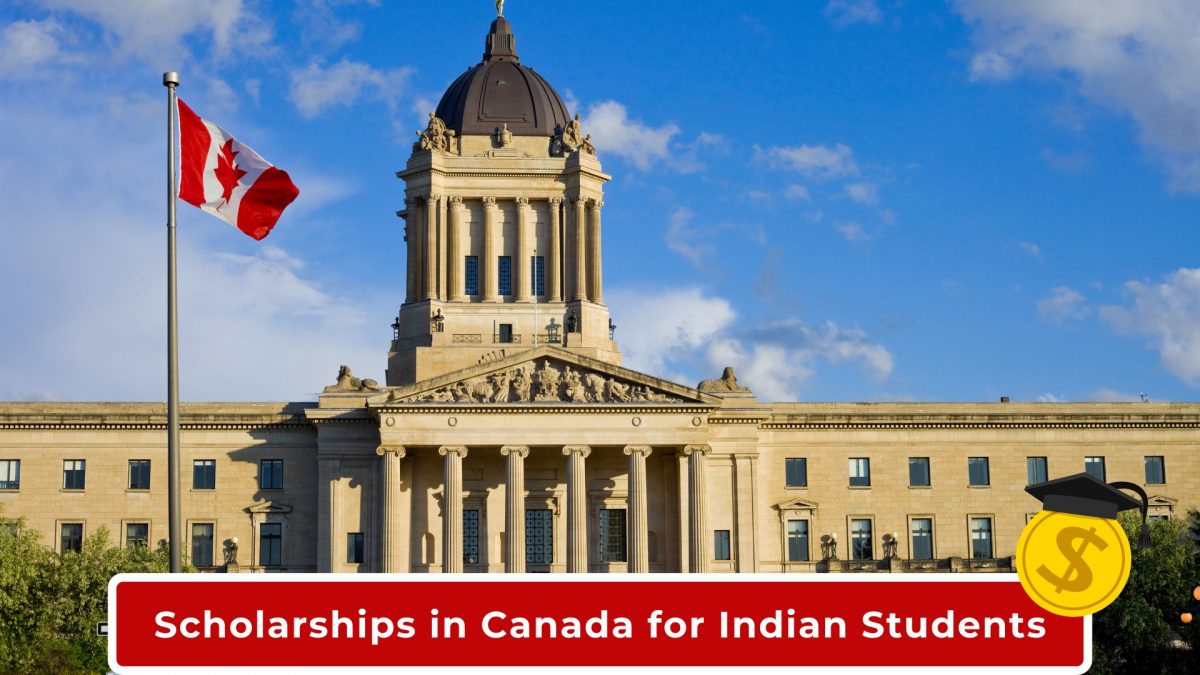
Canada has long been one of the most popular study destinations for Indian students. With globally recognised universities, a welcoming immigration framework, and strong post-study work pathways, it consistently attracts hundreds of thousands of applicants from India each year. But the financial reality of studying abroad is significant: tuition fees for international students now range from CAD 20,000 to CAD 60,000 per year, with annual living costs adding a further CAD 15,000 to CAD 20,000. The good news is that scholarships in Canada for Indian students are plentiful, ranging from fully funded government awards to substantial university-specific grants. As of March 2026, the Canadian government announced a major expansion of scholarship and institutional partnerships specifically targeting Indian students, making this year a particularly promising window.
This guide breaks down every major scholarship opportunity by level of study, eligibility, award value, and application process, so you can identify the best fit and apply with confidence.
If you’re still exploring whether Canada is the right destination, our guide to studying in Canada explains universities, costs, student life, and career opportunities in detail.
Table of Contents
Why Indian Students Choose Canada: The 2026 Context
Canada hosted approximately 997,820 Indian students in 2024, making India the single largest source of international students in the country. Despite a 61% drop in new international student arrivals in 2025 following federal study permit caps, graduate students pursuing Master’s and PhD programmes remain exempt from the 2026 cap, making postgraduate study a strong route for Indian applicants.
In March 2026, Prime Minister Mark Carney led Canada’s largest-ever academic delegation to India, resulting in the launch of the Canada-India Talent and Innovation Strategy. This brought 13 new university partnerships, 300 funded MITACS Globalink research positions, USD 10 million in Indo-Pacific scholarships under Canada’s Indo-Pacific Strategy, and USD 25 million in expanded scholarship funding from the University of Toronto alone for Indian undergraduate students.
Types of Scholarships Available for Indian Students in Canada
Before reviewing individual awards, it helps to understand how Canadian scholarships are structured. Most fall into one of four categories:
- Government-funded scholarships: Administered at the federal or provincial level, open to international students including Indians.
- University-specific scholarships: Offered directly by Canadian institutions, often as entrance awards or departmental grants.
- Bilateral / India-specific scholarships: Programmes designed specifically for Indo-Canadian academic exchange, such as those offered through the Shastri Indo-Canadian Institute.
- Research fellowships and internships: Short- to medium-term research funding for Master’s and PhD students, including the Mitacs Globalink programme.
Not sure where to begin? Start by understanding the different types of international scholarships available before narrowing your options.

Scholarships for Indian Undergraduate Students in Canada
1. Lester B. Pearson International Scholarship (University of Toronto)
The Lester B. Pearson International Scholarship is the most prestigious fully funded undergraduate award in Canada for international students. Offered by the University of Toronto, it covers full tuition, books, incidental fees, and on-campus residence for all four years of study. Approximately 37 scholars are selected globally each year, making this one of the most competitive scholarships available.
Eligibility: International students in their final year of secondary school, nominated by their school. Applicants must begin undergraduate studies at U of T in September 2026. Indian students studying at high schools anywhere in the world are eligible.
Key deadlines (2026 intake): School nominations closed 10 October 2025; student applications closed 7 November 2025. For the 2027 cycle, schools can nominate from July 2026.
Important: The university does not engage with third-party agents for this programme. All nominations must go through the official school process.
If you’re considering the University of Toronto, it’s also worth understanding the university’s admission process and overall competitiveness before applying.
2. UBC International Major Entrance Scholarship (IMES)
The University of British Columbia automatically considers all incoming international undergraduate students for the International Major Entrance Scholarship (IMES). For the 2026/2027 academic year, IMES awards are valued at CAD 10,000 to CAD 25,000 per year, renewable for up to three additional years subject to maintaining academic standing. No separate application is required.
Eligibility: International students entering UBC directly from secondary school, studying on a Canadian study permit, with exceptional academic achievement and extracurricular involvement.
3. UBC Karen McKellin International Leader of Tomorrow (ILOT) Award
For Indian students with demonstrated financial need, the Karen McKellin ILOT Award under UBC’s International Scholars Programme covers the full cost of tuition, fees, and living expenses. The award amount is determined by a needs assessment. Approximately 50 scholarships are awarded annually across all four award categories under this programme.
Eligibility: Must demonstrate superior academic achievement (all A grades or equivalent), significant financial need, and leadership qualities. Requires school nomination and a separate scholarship application submitted by 15 November, with a UBC admissions application by 1 December.
Note: Applicants for the International Scholars Programme are not considered for the merit-only IMES and OIS awards; applicants choose one track.
Scholarships for Indian Master’s Students in Canada
4. Ontario Graduate Scholarship (OGS)
The Ontario Graduate Scholarship is a merit-based award available to both domestic and international graduate students, including Indian nationals, enrolled in Master’s or doctoral programmes at Ontario universities. The award is worth CAD 15,000 per year and is jointly funded by the Province of Ontario and the host university.
Eligibility: Students must be enrolled full-time in a graduate programme at an Ontario institution participating in the OGS scheme. Strong academic standing (typically an A average) is required. Students should apply through their home institution as part of the institution’s internal nomination process.
5. University-Specific Master’s Entrance Awards
Most major Canadian universities offer merit-based entrance scholarships for international Master’s students. These typically range from CAD 1,000 to CAD 35,000 per year depending on the institution and programme. Students are often automatically considered upon admission, though some require a separate departmental application. Universities with strong track records for funding Indian graduate students include University of Toronto, UBC, University of Waterloo, McGill University, and York University.
Choosing the right university is just as important as securing funding. Compare universities based on academics, research opportunities, costs, and career outcomes before applying.
Scholarships for Indian PhD Students in Canada
6. Canada Graduate Research Scholarship – Doctoral (CGRS-D)
The CGRS-D is the successor to the now-discontinued Vanier Canada Graduate Scholarships. It is the premier doctoral award in Canada, valued at CAD 40,000 per year for up to three years. Indian students pursuing a first doctoral degree at a participating Canadian university are eligible.
Eligibility: Must be enrolled in a full-time doctoral programme with a significant research component. Candidates cannot apply directly; they must be nominated by a Canadian university with a CGRS-D quota. The university conducts an internal competition before nominating candidates nationally. Strong academic excellence, research potential, and leadership profile are required.
Application timeline: The nomination process typically begins in the summer preceding the academic year. Candidates should contact the graduate studies office of their intended institution well in advance.
7. Banting Postdoctoral Fellowships
For Indian researchers who have completed a PhD, the Banting Postdoctoral Fellowship offers CAD 70,000 per year for two years to conduct research in Canada in health, natural sciences, engineering, social sciences, or humanities. This is one of the most prestigious postdoctoral awards globally.
Eligibility: Must have completed a PhD or equivalent degree between September 15, 2021 and September 30, 2026 (for the 2026 competition). Must be affiliated with a Canadian institution. Candidates must be nominated by the host institution. Annually, approximately 70 fellowships are awarded.
India-Specific and Bilateral Scholarships for Canadian Studies
8. Shastri Indo-Canadian Institute Fellowships
The Shastri Indo-Canadian Institute (SICI) is a bilateral organisation promoting academic and research collaboration between India and Canada. It offers several fellowship categories specifically for Indian students and researchers:
- Shastri Research Student Fellowship (SRSF): For Indian students conducting research related to Canada at Indian universities.
- Shastri Canadian Studies Doctoral Research Fellowship: For Indian PhD scholars undertaking doctoral research focused on Canada. The fellowship provides CAD 1,100 to CAD 1,300 per month for three to four awards annually.
- Mitacs-SICI Globalink Research Award: Provides CAD 6,000 per internship for Master’s, PhD, and postdoctoral students from SICI member institutions in India to conduct 12-24 week research projects at Canadian universities. The package covers airfare, visa costs, medical insurance, accommodation, and a living stipend.
Applications are submitted through the Shastri Institute’s India office or via the Mitacs portal. Check the Shastri Institute website (shastriinstitute.org) for current deadlines as they vary by programme.
9. Indo-Pacific Scholarships (Government of Canada)
As part of Canada’s Indo-Pacific Strategy, CAD 10 million has been allocated to scholarships for students from Indo-Pacific countries, including India. These are administered through the Canadian Bureau for International Education (CBIE) and cover graduate-level studies. Details on the 2027 intake cycle are expected to be released through EduCanada (educanada.ca) later in 2026.
10. University of Toronto Expanded Scholarship Programme for Indian Students (2026)
In March 2026, the University of Toronto announced an expanded scholarship pool for Indian students, building on CAD 63 million in merit-based awards previously granted to over 700 Indian undergraduates since 2020. A further 274 scholarships are available in the current admissions cycle, with an additional USD 25 million committed. These awards are accessible through the standard U of T admissions process and are distributed across undergraduate, Master’s, and doctoral levels.
Not Sure Which Canadian Scholarships You Can Apply For?
Scholarship eligibility depends on your academic profile, course, university, and study level. Career Launcher Study Abroad helps you identify the best scholarship opportunities and build a stronger application strategy.
Quick Comparison: Top Scholarships for Indian Students in Canada (2026)
| Scholarship | Level | Value (CAD) | Type | Open to Indians? |
| Lester B. Pearson (U of T) | Undergraduate | Full ride (4 yrs) | Merit | Yes |
| UBC IMES | Undergraduate | $10,000–$25,000/yr | Merit | Yes |
| UBC Karen McKellin ILOT | Undergraduate | Full need-based | Merit + Need | Yes |
| CGRS-Doctoral (Vanier successor) | PhD | $40,000/yr (3 yrs) | Merit/Research | Yes |
| Banting Postdoctoral Fellowship | Postdoctoral | $70,000/yr (2 yrs) | Merit/Research | Yes |
| Ontario Graduate Scholarship (OGS) | Master’s / PhD | $15,000/yr | Merit | Yes |
| Mitacs Globalink Research Award | Master’s / PhD | $6,000/project | Research | Yes |
| Shastri Indo-Canadian Fellowships | All levels | $2,000–$15,000+ | Research | Yes (India-specific) |
| U of T Expanded Scholarship (2026) | UG/PG | $25 million pool | Merit | Yes (Indian students) |
How to Apply for Scholarships in Canada: Step-by-Step
- Start 8 to 12 months early. Most Canadian scholarship deadlines for the fall intake fall between September and January.
- Shortlist scholarships that match your academic level (undergraduate, Master’s, PhD) and field of study. Use official portals like EduCanada (educanada.ca) and individual university websites.
- Check eligibility requirements carefully. Confirm academic standing thresholds, nomination requirements, and study permit conditions.
- Secure a school or university nomination where required. For Pearson, ILOT, and CGRS-D, you cannot apply without institutional nomination.
- Apply for admission first. Most scholarships require an active application to the university.
- Prepare your application documents: academic transcripts, Statement of Purpose (SOP), letters of recommendation, proof of English proficiency (IELTS/TOEFL), and financial documents if needed.
- Submit before the stated deadline. Late submissions are typically not accepted.
- Track your application. Note that multiple deadlines apply (nomination deadline, admissions deadline, scholarship application deadline).
Who Is Eligible for Canadian Scholarships as an Indian Student?
Eligibility criteria vary by scholarship, but the following are common across most programmes:
- Indian nationality (citizen of India), with a valid or intended Canadian study permit.
- Strong academic record: typically an A average or equivalent (90%+ for Indian boards in many cases).
- Enrolment or intended enrolment in a recognised degree programme at an eligible Canadian institution.
- Programme-specific requirements: research-focused scholarships require a research proposal; need-based awards require financial documentation.
- For nomination-based awards: the applicant’s school or university must have the right to nominate within that scholarship scheme.
Some awards, including IMES at UBC, require no separate application. Others, such as the CGRS-D and Pearson, require multi-step nomination and application processes.
Practical Tips to Strengthen Your Scholarship Application
- Apply for multiple scholarships simultaneously. There is no rule against this, and the same documents (SOP, transcripts, recommendation letters) can be adapted.
- Write a strong Statement of Purpose. Committees want to know your research interests, career goals, and why Canada specifically. Be precise and avoid generic statements.
- Build a research or leadership profile early. Awards like CGRS-D and ILOT weigh leadership and community contribution heavily alongside academic merit.
- Approach your referees early. Most scholarships require two to three letters of recommendation; give your referees at least four to six weeks’ notice.
- Use EduCanada’s scholarship search tool (educanada.ca) for a regularly updated list of government-linked scholarships open to Indian students.
- Verify all data from primary sources. Scholarship amounts and deadlines change annually. Always cross-check figures against official university or government websites before applying.
- Beware of fraudulent offers. The University of Toronto has issued warnings about third parties falsely claiming to assist with the Pearson Scholarship. No legitimate scholarship charges application fees.
Understanding the Cost of Studying in Canada for Indian Students
Knowing what a scholarship covers helps you assess the gap it fills:
- Annual tuition (international): CAD 20,000 to CAD 60,000, depending on institution and programme.
- Annual living costs: CAD 15,000 to CAD 20,000 (accommodation, food, transport, personal expenses).
- Health insurance: Most universities require provincial or university health cover; costs range from CAD 600 to CAD 900 per year.
Fully funded scholarships like the Pearson and ILOT cover all the above. Partial scholarships like IMES or OGS offset a significant portion but leave a residual cost. Mitacs awards cover research-related and internship costs but are not designed for full degree funding.
Planning to Study in Canada in 2026?
Get personalised guidance on universities, scholarships, education loans, applications, visa preparation, and everything you need to study in Canada with confidence.
Recommended Reads
FAQs
What is the best scholarship for Indian students to study in Canada?
For undergraduate students, the Lester B. Pearson International Scholarship at the University of Toronto is the most prestigious fully funded option, covering tuition, books, and accommodation for four years. For PhD researchers, the Canada Graduate Research Scholarship – Doctoral (CGRS-D), at CAD 40,000 per year for three years, is the top government award.
Are there fully funded scholarships in Canada specifically for Indian students?
Yes. The University of Toronto’s expanded scholarship programme, announced in March 2026, is specifically directed at Indian students and includes fully funded awards at undergraduate and graduate levels. The Shastri Indo-Canadian Institute also offers India-specific fellowship programmes, and the Mitacs Globalink award funds research internships for Indian students at Canadian universities.
How competitive are Canadian scholarships for Indian students?
Competition is significant. The Pearson Scholarship selects approximately 37 students globally each year from thousands of nominees. The CGRS-D is also highly selective, operating through a university quota system. University entrance awards like IMES at UBC are more accessible; all qualifying international applicants are automatically considered. Candidates with strong academics, leadership profiles, and clear research goals have the best prospects.
When should I start applying for Canadian scholarships?
Start 8 to 12 months before your intended intake. Most deadlines for the fall 2026 intake were between August and January 2026. For fall 2027, preparation should begin by mid-2026. Nomination-based awards require additional lead time to secure an institutional nomination.
Do I need an IELTS or TOEFL score to apply for Canadian scholarships?
Most Canadian universities require English proficiency proof for admission, which is also required for scholarship consideration. Accepted tests include IELTS Academic (typically 6.5 or above), TOEFL iBT, PTE Academic, and in some cases the Duolingo English Test. Requirements vary by institution and programme.
Can Indian students on a study permit work in Canada while receiving a scholarship?
Yes. International students with a valid Canadian study permit are generally permitted to work up to 24 hours per week off campus during term time and full-time during scheduled breaks. However, some scholarship terms (particularly for research fellowships) may specify restrictions. Always check the conditions of your individual award.
Is the Vanier Canada Graduate Scholarship still available in 2026?
No. The Vanier CGS programme accepted its final applications in the 2024-2025 cycle and has been discontinued. It has been replaced by the Canada Graduate Research Scholarship – Doctoral (CGRS-D), valued at CAD 40,000 per year for three years, administered through the same Tri-Agency framework.