CAT Preparation Without Coaching: Preparing for the CAT exam requires a well-structured approach due to the tough competition, with over 3 lakh students for a few thousand seats in the prestigious IIMs. The first step is to carefully select a study mode that aligns with your learning style. Despite the exam’s difficulty, effective preparation, quality resources, and a consistent study schedule contribute to successfully cracking the CAT.
So, when thinking about joining a coaching class or preparing for CAT without coaching, you might have various questions, such as:
- Can I crack the CAT without coaching?
- How important is expert guidance when preparing for CAT?
- Do I need to join CAT coaching to score 99+ percentile?
- How do I prepare a study schedule and choose the right resources?
The most effective way to prepare for CAT without coaching is to follow a comprehensive study plan and make a definitive approach to CAT preparation.
Table of Contents
Is It Possible to Prepare for CAT without Coaching?
Many students opt to join coaching classes and institutes to receive help in boosting their CAT preparation, resulting in a significant increase in the number of CAT coaching centres. However, it is a myth that the majority of aspirants mistakenly believe that only by attending these coaching classes can they achieve good CAT scores.
On the other hand, some students do not want to invest in any expensive CAT coaching institute, whether online or offline, because of their hefty fees. For such students, CAT preparation at home plays an important role. Here, online resources come into play; one can either start their preparation using the free CAT resources available online or consider purchasing some good CAT books and study materials for practice.
Now the question arises: “Is it even worth pursuing self-study while preparing for CAT?” To answer this burning question, if your basics are clear and you are willing to devote time to your studies with focus, then yes, you can ace the CAT with the self-study approach.
Many students have secured a good percentile in CAT by preparing on their own with the right materials, including books and online resources. It’s important to practice regularly with mock tests, review your performance, and work on areas where you need improvement. Many online platforms provide helpful resources like sample papers, video lessons, and study tips. With good time management and steady effort, studying alone can be just as effective as going to a coaching institute when it comes to preparing for the CAT exam.
Also Read – Last 30 Days CAT Preparation Strategy
How to Prepare for CAT 2026 Without Coaching?
Now that you have decided to go forward with self-studying for your CAT 2026 exam, the next step is to cover all the bases as you move forward. Here are some expert tips that you must keep in mind before you start preparing for the CAT exam without coaching.
1. Understand the Syllabus & Exam Pattern
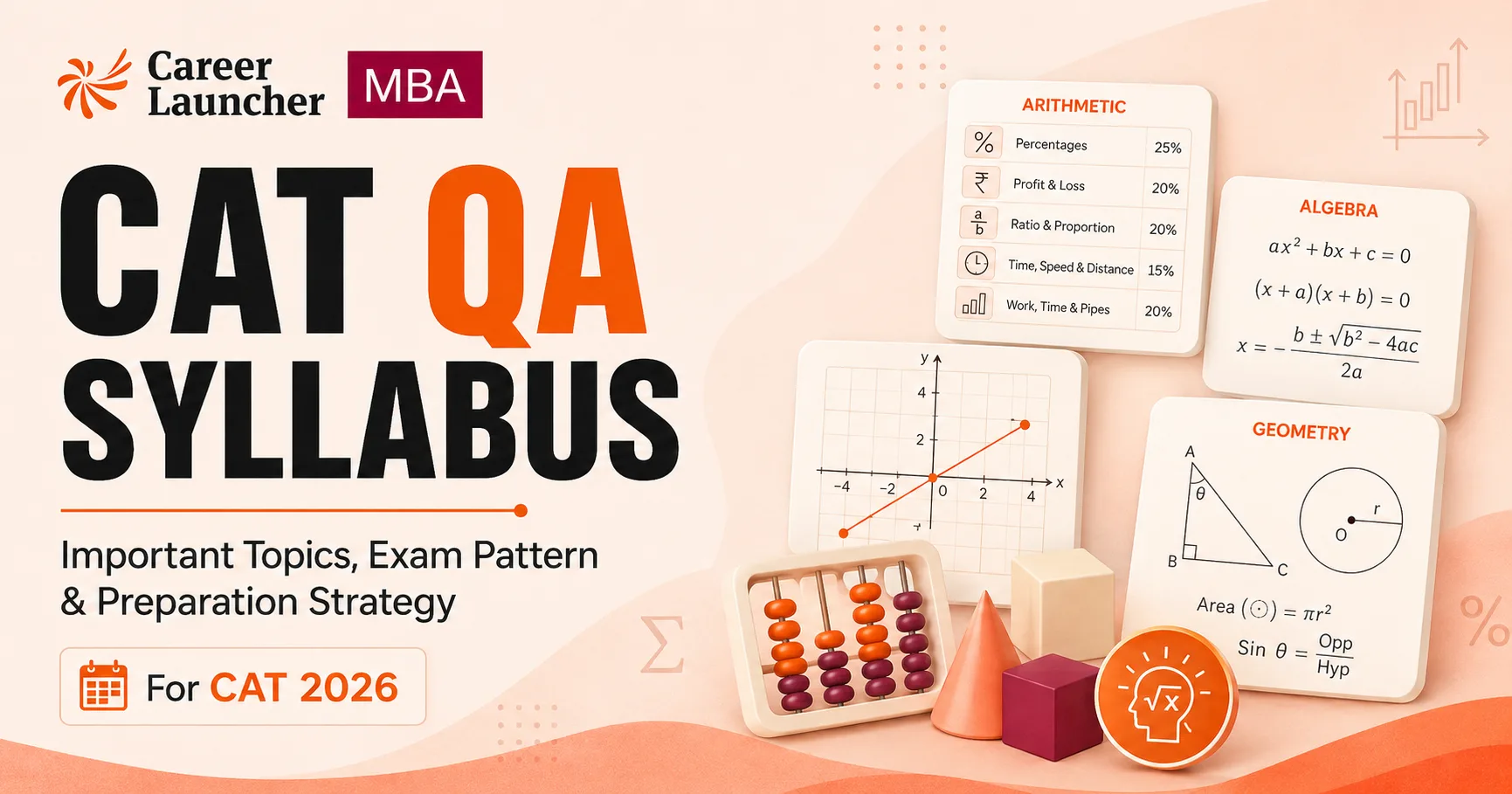
Jumping into preparation without understanding the CAT syllabus or exam pattern is a futile attempt and a waste of time. The syllabus for CAT exam is vague and vast, as no official syllabus exists. However, an analysis of past papers can briefly encompass the essential topics that must be well-prepared. As long as you are unable to identify the most important topics of the exam, you will only attempt to read up on every single topic and fail to cover the fundamentals successfully. Going over the exam pattern and syllabus will allow you to come up with a comprehensive study plan and formulate a schedule for the same.
| Understand The Latest CAT Exam Pattern | ||
| CAT Exam Sections | Total Questions | Total Time (in minutes) |
| Verbal Ability and Reading Comprehension (VARC) | 24 | 40 |
| Data Interpretation and Logical Reasoning (DILR) | 22 | 40 |
| Quantitative Aptitude (QA) | 22 | 40 |
| Total | 68 | 120 |
Check out: CAT 2026 Important Topics
2. Identify The Best Resources
Students preparing for CAT by enrolling in coaching classes are provided with the study material and resources most ideal to boost their performance in CAT. However, when you choose to self-study, you must identify and choose the study material yourself. This can prove to be an arduous task owing to the availability of various study materials on the internet. So, as you decide on the books you will use to prepare for CAT, keep a few things in mind:
- Do a little research about the best CAT books on the internet for better preparation
- Ensure that the latest version of the book is available with the latest syllabus & exam pattern.
- The authors are reliable and well-known in the CAT and MBA fields
3. Prepare a Study Plan
To stay committed to your CAT preparation and track your progress while covering the fundamentals, create a study plan for each day and make sure you reach your daily goal. This will also help you stay motivated, as the short-term goals will help you progress faster from one milestone to the next. A study plan, based on your hours of availability, should include the section-wise time you allot each day and the topic you will cover.
4. Attempt Regular Mock Tests
Mock tests are essential to mark your progress and the level at which your CAT preparation is. Before you begin your preparation, attempting a mock will tell you where you stand at the start and help you progress accordingly. You will also get an insight into how you are performing, your weak areas, and your strengths. Ideally, you should begin attempting mocks regularly only after you have covered the basics properly. This will give you the right direction in which you must prepare and also let you analyse your test-taking strategy.
After each mock, always ensure that you spend time analysing it in detail with a focus on your weak section, topics that need more preparation, and errors you could have avoided. Also, ensure that you attempt the questions that you answered incorrectly or left unanswered.
You can access free CAT mocks online or enrol in a CAT mock test series to get a detailed analysis of your performance.
5. Join a Peer Study Group
Since you are preparing by yourself, understanding where you stand against your peers can become a difficult task. Thus, joining a peer group will give you insight into how your peers are preparing, the competition you will face in CAT 2026, and tips to improve your performance. Being in the company of people pursuing similar goals is also a motivating factor to prepare and perform well. You will also get guidance to overcome any obstacles and find a solution to your problems easily. Attempting the same mock tests will also enable you to analyze your competitors, improve your performance, and stay on the right track for preparations.
6. Improve Time Management Skills
Learning time management is most important if you are preparing for any exam. Better time management can help to improve your CAT score. The best way to improve your time is by taking mock tests regularly. This helps you get used to solving questions within a limited time. It is important to enjoy the process while preparing can make you more productive.
7. Use CAT Online Resources
The internet gives you access to numerous articles, resources, and guides without spending any money or wasting time. You can not only access study materials but also get tips for your CAT preparation from experts in free sessions and on YouTube. Sample papers, free mock tests, and past-year papers are all available for your perusal. So make use of the internet by reading articles and staying up-to-date about the latest CAT news.

Common Mistakes To Avoid During CAT Preparation Without Coaching
To succeed in CAT exam, it’s crucial to avoid common mistakes that can hurt your preparation. Here are some key pitfalls to watch out for:
- Ignoring the Syllabus: Some students don’t fully understand what the CAT syllabus includes, which can leave gaps in their study plans. Knowing the syllabus inside and out will help you prepare effectively.
- Not Reading Newspapers Daily: Skipping your daily newspaper reading can hurt your verbal skills and knowledge of current events, both of which are important for the exam.
- Using Poor Study Materials: Relying on low-quality or irrelevant resources can negatively impact your preparation. It’s essential to choose materials that cover the entire syllabus comprehensively.
- Weak Mathematics Preparation: Since the exam has a strong focus on math, not dedicating enough time to this subject can hurt your overall preparation. Make sure you have a solid grasp of the basic concepts from grade 11.
- Procrastination and Poor Time Management: Putting off your studies or leaving topics until the last minute can lead to incomplete preparation. Having a clear study schedule is essential.
- Bad Note-Taking: If your notes are messy or incomplete, it will be harder to revise. Take organised notes regularly to help you remember and understand the material better.
- Not Setting Clear Goals: Without specific goals, students may waste time on less important topics. Set daily and weekly goals to better manage your study time.
- Relying Too Much on Mock Tests: While mock tests are helpful, focusing solely on them without reviewing the syllabus can leave gaps in your knowledge. It’s important to balance practice tests with content review.
- Not Reviewing Mock Tests: If you don’t look over your mock test results, you won’t know where you’re strong or where you need improvement. Analysing your performance is key to getting better.
- Underestimating the Exam’s Difficulty: Some students think CAT is easy, which can lead to inadequate preparation. Understanding that it’s a competitive exam is important for creating an effective study plan.
Conclusion
When deciding between preparing for CAT with coaching or on your own, it’s important to weigh the pros and cons. Your success in CAT depends on how well-prepared you are. Self-study requires discipline, commitment, and time to create a study plan, choose resources, and stick to study hours. On the other hand, coaching can be less stressful for those with limited study time, as it provides structured support during designated hours.
Related Articles –
Top Careers in MBA CAT Online Classes CAT Preparation For Working Professionals
Frequently Asked Questions
Que – I want to take the CAT 2026. How can I start self-studying for CAT 2026? What should be my strategy?
Ans – To crack CAT without coaching, you must create a study plan to follow through thoroughly. Here are some steps you can follow:
- Establish a preparation plan that best suits your requirements
- Identify your weakest and strongest areas and work accordingly
- Find the latest and most reliable study material
- Join a peer group of similar candidates to stay on the right track.
A disciplined candidate will be able to prepare on their own and even score well in the CAT.
Que – How should I simultaneously manage my CAT studies with my college studies?
Ans – Candidates who are still completing their degree can give 2 hours daily to CAT preparations after their college classes. As college students (and working professionals) have limited time in a day, you must establish a strong foundation and practically divide your schedule.
Que – When should I begin preparing for CAT 2026?
Ans – If you are preparing for the first time, you should ideally begin preparations about 10-12 months in advance. However, there is still time for you to catch up and prepare for the CAT well. You can start by enrolling in a course for CAT 2026, as it will help you stay on track and cover the basics, practice mocks, and analyse them in the next few months.
Que – How should I begin preparing for CAT 2026?
Ans – The first step of the CAT preparation is to decide whether you will prepare for the CAT by yourself or enrol in a course. You should also go over the previous year’s CAT papers and familiarise yourself with the syllabus and exam pattern.
Que – Which is better, an online full CAT course or an online CAT test series with self-preparation?
Ans – An online CAT course and an online CAT test series both have their advantages when preparing for CAT. So to choose one over the other, it is necessary that candidates identify their needs and requirements.
An online CAT course will help a candidate establish their fundamentals and learn the tips & tricks to solving questions accurately and quickly. It will also help candidates get expert advice and establish their fundamentals. On the other hand, CAT test series will enable an already prepared candidate to practise and review their progress to identify their weaknesses and problems. It is for a candidate who has set their base and aims to revise and improve their performance.