If you are planning to study or work in the UK, learning how to build a UK resume, cover letter, and LinkedIn profile for Jobs and Internships is one of the most important steps in your journey. Many Indian students focus heavily on academics, but when it comes to applying for internships, part-time jobs, or graduate roles in the UK, employers pay close attention to how you present your skills and experience. A well-structured CV, a tailored cover letter, and a strong LinkedIn profile can significantly improve your chances of getting shortlisted.
The UK job market is competitive but also transparent. Employers are not just looking for high grades. They want to see communication skills, initiative, teamwork, and real-world experience. This means your application documents need to clearly demonstrate your strengths and achievements in a concise, professional manner.
This complete guide explains how Indian students in 2026 can build a UK-ready resume, write an effective cover letter, and create a strong LinkedIn profile that helps them stand out.
Table of Contents
Confused about where to begin with your UK applications and career prep?
Get personalised guidance on CV building, applications, and career strategy with Career Launcher Study Abroad experts.
Why the UK Resume Format is Different for Indian Students
Before you start building your resume, it is important to understand that UK employers follow a different format compared to those in India. In India, resumes are often longer and include personal details, academic achievements, and detailed descriptions. In the UK, recruiters prefer concise documents that focus on relevant skills and measurable achievements.
UK employers usually spend only a few seconds scanning each CV. If your resume is too long or difficult to read, you may miss out on opportunities even if you have strong qualifications. This is why keeping your résumé clear, structured, and focused is essential.
Here is a simple comparison to help you understand the difference:
| Indian Resume | UK Resume |
|---|---|
| 2+ pages | 1 to 2 pages |
| Includes photo | No photo required |
| Focus on academics | Focus on skills and achievements |
| Detailed personal information | Minimal personal details |
| Same CV for all jobs | Tailored CV for each role |
The most important difference is length and focus: a UK resume should be no more than two pages, with achievements taking priority over personal details. Understanding these differences will help you create a resume that meets UK employer expectations.
What UK Employers Look For in Indian Students
UK employers value practical skills and transferable experience. Even if you do not have formal work experience, you can still create a strong application by highlighting relevant skills.
Employers usually look for:
- Communication skills and teamwork
- Problem-solving ability
- Initiative and leadership
- Academic and project experience
- Internship or part-time work
- Industry awareness
Your resume, cover letter, and LinkedIn profile should clearly highlight these qualities. UK employers often use competency-based interviews (STAR method), which aim to find out how you have used specific skills in your last workplace.

Step-by-Step Guide to Building a UK Resume
1. Add Professional Contact Details
Start your CV with your contact information. This section should be simple and professional. You only need to include essential details so that employers can contact you easily.
Include:
- Full name
- UK phone number (if available)
- Professional email address
- LinkedIn profile
Avoid adding unnecessary personal details such as your photo, date of birth, religion, or marital status. These are not required in the UK and may even make your CV look unprofessional.
Make sure your documents are aligned with the Complete UK Application Document Checklist (2026).
2. Write a Strong Personal Statement
Your personal statement is a short paragraph at the top of your CV. This section introduces you and summarises your skills and career goals. A strong personal statement helps employers quickly understand your profile.
Your personal statement should include:
- Your degree or field of study
- Key skills
- Career goals
- Type of role you are seeking
Example:
You are currently pursuing an MSc in Marketing and have experience in social media campaigns and data analysis. You are looking for internship opportunities where you can apply creative and analytical skills to support marketing strategies.
Keep this section concise but impactful. To improve your writing approach, refer to How to Write a Statement of Purpose (SOP) for UK Universities.
3. Highlight Your Key Skills
The skills section helps recruiters quickly identify your strengths. You should include both technical skills and soft skills that are relevant to the job.
Technical skills may include tools and software such as Excel, Python, or Power BI. Soft skills may include communication, teamwork, and problem-solving.
Instead of simply listing skills, try to align them with the job description. This improves your chances of passing applicant tracking systems.
4. Add Your Education Section
Your education section is especially important if you are a student or recent graduate. List your education in reverse chronological order.
Include:
- Degree title
- University name
- Duration
- Predicted or achieved grade
- Relevant modules
- Academic projects
If you completed relevant coursework or research, mention it briefly to demonstrate your knowledge. Understanding your degree structure through the UK Degree Types Guide: Foundation, UG, Master’s, and PhD will help you present your academic background clearly and effectively.
5. Include Work Experience and Internships
Even if you do not have full-time work experience, you can include internships, part-time jobs, volunteer roles, or university projects. These experiences demonstrate your skills and work ethic.
When writing this section, focus on achievements rather than responsibilities. For example, instead of writing “worked on marketing campaigns”, explain what you achieved, such as improving engagement or analysing data.
This approach helps employers understand the value you bring. Read How to Find Internships in the UK for Indian Students (2026 Guide) to understand where to find and how to apply for roles.
6. Add Projects and Extracurricular Activities
Many Indian students underestimate the importance of projects. Academic projects, group assignments, and university activities can strengthen your CV.
You can include:
- Academic projects
- Group assignments
- Research work
- Student society roles
- Volunteering
These experiences demonstrate teamwork, leadership, and initiative.
7. Optional Sections to Include
You may also include additional sections if relevant:
- Certifications
- Languages
- Technical tools
- Interests
Make sure these sections add value to your application.
If you are applying to creative fields, also explore UK Portfolio Requirements for Design, Art & Architecture to strengthen your application further.
UK Resume Formatting Tips
To make your CV look professional:
- Keep it to one or two pages
- Use clear headings
- Use bullet points
- Use consistent formatting
- Use professional fonts like Arial, Calibri or Helvetica
- Use reverse chronological order throughout
- Save and send as a PDF
- Avoid tables or complex layouts that break ATS parsing
Explore: Academic CV for UK Applications: Format & Guide (2026)
How to Write a UK Cover Letter
Your cover letter complements your CV by explaining your motivation and suitability for the role. A well-written cover letter can significantly improve your chances of getting shortlisted.
Your cover letter should be structured clearly and written in a professional tone.
It works alongside your CV, much like SOPs and LORs do in university applications. To strengthen your writing approach, you can also refer to How to Write a Letter of Recommendation (LOR) for UK Universities to understand structured professional writing.
Structure of a UK Cover Letter
-
Introduction
Start by introducing yourself and mentioning the role you are applying for. You should also briefly explain why you are interested in the opportunity.
-
Highlight Your Skills
In the second paragraph, explain your skills and experience. Focus on relevant achievements and explain how your background matches the role.
-
Show Interest in the Company
Employers want to see that you have researched their organisation. Mention what interests you about the company and how you can contribute.
-
Closing Paragraph
End your cover letter by expressing interest in the role and thanking the recruiter for their time.
Cover Letter Tips for Indian Students
- Keep your cover letter to one page
- Tailor it for each role
- Avoid repeating your CV
- Use a professional tone
- Proofread carefully
- Address it to a named person (Dear Mrs. Smith) rather than “To Whom It May Concern”
How to Build a Strong LinkedIn Profile
Your LinkedIn profile is often the first place recruiters check. A strong LinkedIn profile increases your visibility and helps you connect with professionals.
-
Create a Professional Profile
Use a professional photo with good lighting and a neutral background. This helps create a strong first impression.
-
Write a Strong Headline
Your headline should clearly describe who you are and what you are looking for. Include your field of study and career goals.
-
Write an Engaging About Section
Your About section should tell your story, highlight your skills, and explain your career interests. This helps recruiters understand your background.
-
Add Experience and Projects
Include internships, academic projects, and part-time work. These experiences help demonstrate your skills.
-
Build Your Network
Start connecting with classmates, alumni, and recruiters. Networking can help you discover opportunities and gain insights.
-
Stay Active
Post updates, share achievements, and engage with content. “Staying active on LinkedIn increases your profile’s visibility to recruiters and keeps you appearing in connection feeds. .
-
Use job-relevant keywords
Use keywords tailored to your profile, such as “MSc Finance” or “data analytics graduate”, in your headline and About section so you appear in recruiter searches.
Other than these, you can set your profile to “Open to Work” (can be visible only to recruiters), follow target company pages, and request recommendations from professors or internship supervisors.
Resume vs Cover Letter vs LinkedIn: What’s the Difference and Why You Need All Three
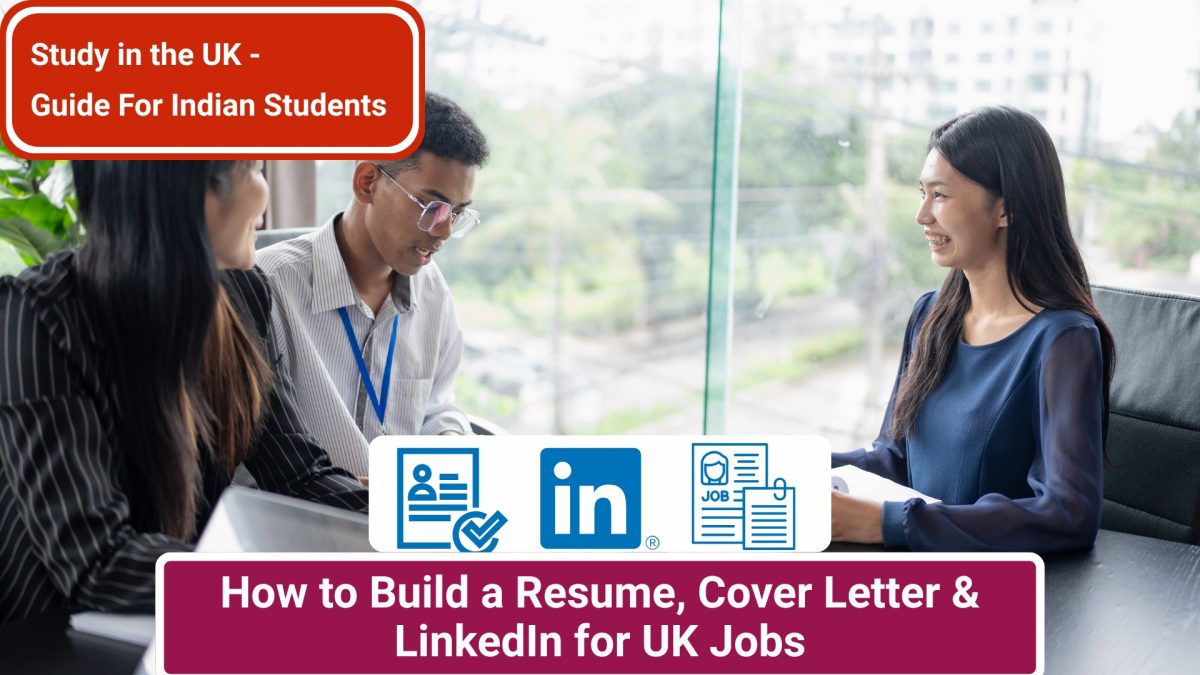
When you apply for internships or jobs in the UK, your résumé, cover letter, and LinkedIn profile work together as a complete application package. Each document serves a different purpose, and using all three effectively can significantly improve your chances of getting shortlisted. Together, your CV, cover letter, and LinkedIn profile form a single, consistent application. Think of them as three pieces of the same puzzle. When combined, they give employers a clear picture of who you are, what you offer, and why you are a strong candidate.
| Document | Purpose |
|---|---|
| Resume | Job applications |
| Cover Letter | Personalised application |
| Networking and visibility |
Resume: Your First Impression
Your résumé is usually the first document employers review. It provides a structured summary of your education, skills, internships, and achievements. UK employers often scan resumes, so your resume needs to be clear, concise, and relevant to the role you are applying for.
A strong resume helps employers quickly understand the following:
- Your academic background
- Relevant skills and tools
- Internship or work experience
- Projects and achievements
- Career interests
Your résumé should always be tailored for each role. Even small changes, such as adjusting your skills section or highlighting specific projects, can improve your chances of getting shortlisted.
Cover Letter: Your Personal Story
While your resume focuses on facts, your cover letter adds personality and context. This is your opportunity to explain why you are applying and what makes you a strong fit for the role.
A good cover letter helps you:
- Show genuine interest in the company
- Explain your motivation
- Highlight relevant experience
- Connect your skills to the job description
UK employers value tailored applications. A personalised cover letter shows that you have taken the time to research the company and understand the role. This can make your application stand out from others.
LinkedIn: Your Professional Presence
Your LinkedIn profile acts as your online resume. Many recruiters search for candidates directly on LinkedIn before shortlisting applicants. This means your profile should be complete, professional, and aligned with your resume.
LinkedIn helps you:
- Connect with recruiters and professionals
- Discover internship opportunities
- Showcase projects and achievements
- Build your professional network
- Stay updated with industry trends
Being active on LinkedIn by sharing posts, engaging with content, and connecting with alumni can also improve your visibility and increase your chances of finding opportunities.
Why Using All Three Together Matters
When you use your resume, cover letter, and LinkedIn together, you create a strong and consistent application. Your resume highlights your skills, your cover letter explains your motivation, and LinkedIn strengthens your professional presence.
Together, they help you:
- Build credibility
- Stand out from other applicants
- Show professionalism
- Increase interview opportunities
In a competitive UK job market, using all three effectively can give you a significant advantage.
Building a strong UK resume, cover letter, and LinkedIn profile takes time, but it is one of the most important steps in your career journey. When you present your skills clearly and professionally, you significantly improve your chances of securing internships and job opportunities in the UK.
Career Launcher Study Abroad Support
Building a UK-ready resume, cover letter, and LinkedIn profile can feel overwhelming, especially if you are applying for the first time. Career Launcher Study Abroad offers expert guidance to help you build strong applications and improve your chances of success.
You can get support with:
- UK resume building
- Cover letter writing
- LinkedIn optimisation
- Interview preparation
Recommended Reads
- UK Study Guide for Indian Students (2026)
- Academic CV for UK Applications: Format & Guide (2026)
- Best Part-Time Jobs in the UK for Indian Students in 2026
- UK Work Culture for International Students: How to Adapt & Succeed
FAQs
How long should a CV be for UK jobs?
A UK CV should be one to two pages long. For students and recent graduates, one page is usually preferred. Recruiters spend only a few seconds scanning each CV, so keeping it concise and relevant is more important than including everything.
Do I need to include a photo on a UK CV?
No. Photos are not expected on UK CVs and are generally not recommended. Unlike in some countries, including a photo may actually appear unusual to UK recruiters. Leave it out entirely.
Is LinkedIn important when looking for jobs in the UK?
Yes, very. Most UK recruiters search for candidates directly on LinkedIn before shortlisting applicants. A complete profile with a professional photo, keyword-rich headline, and updated experience section significantly improves your visibility and chances of being approached for roles.
Should I use the same CV for every job application in the UK?
No. UK employers expect tailored applications. Even small changes like adjusting your personal statement, reordering your skills, or highlighting a specific project can significantly improve your chances of passing automated screening (ATS) and catching a recruiter’s attention.
Do I need a cover letter for UK job applications?
Yes, in most cases. A tailored cover letter strengthens your application by showing genuine interest in the company and explaining why you are the right fit for that specific role. Many UK employers will not consider applications submitted without one.
What is a personal statement on a UK CV?
A personal statement is a short paragraph, usually 3 to 5 sentences, placed at the top of your CV. It summarises your degree or field of study, key skills, and the type of role you are looking for. It is the first thing recruiters read, so it should be clear, specific, and tailored to the job.