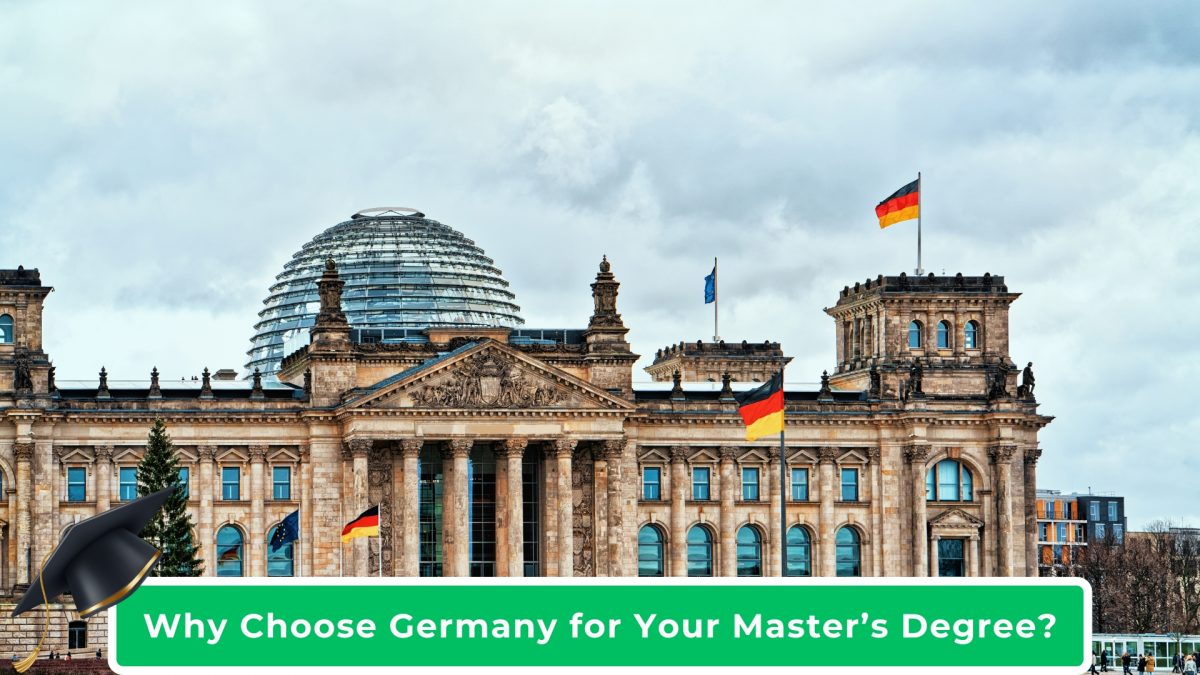
Germany has quietly become one of the smartest study-abroad choices for Indian students — and for good reason. Over 42,000 Indian students were enrolled at German universities in 2024–25, making India the largest source of international students in the country. The combination of world-ranked universities, near-zero tuition fees, English-taught programs, and an 18-month post-study work visa makes Germany hard to beat on value.
If you’re a BTech or bachelor’s graduate considering a master’s abroad, here’s a comprehensive guide covering everything from top universities and eligibility to the APS certificate, visa process, and what life after graduation looks like.
If you’re still exploring Germany as a destination, start with our complete Study in Germany Guide, which covers top universities and programs, costs, visas, accommodation, and student life in detail.
Table of Contents
Why Indian Students Choose Germany for a Master’s
Germany offers over 1,900 English-taught master’s programs, and more than 85% of master’s students at public universities pay zero tuition.
- Little to no tuition: At most public universities in Germany, international students pay no tuition fees. They only have to pay a semester contribution of €100–€300 that often includes a public transport pass.
- World-class rankings: Over 40 universities in Germany rank among the top 1,000 globally in QS Rankings.
- Industry exposure: Germany’s manufacturing, IT, automotive, and pharmaceutical sectors offer strong internship and placement pipelines.
- Post-study opportunity: You get 18 months after graduation to find a job — with no restrictions on field or employer.
- Path to PR: Germany offers one of the clearest routes to permanent residency in Europe.
Wondering If Germany Is the Right Fit for Your Profile?
Choosing the right country, university, and course can make a huge difference to your study abroad journey. Get a free profile evaluation with Career Launcher Study Abroad and receive personalised guidance tailored to your academic background, career goals, and budget.
Top Universities for Master’s in Germany for Indian Students
The Technical University of Munich (TUM), Ludwig-Maximilians-Universität München (LMU), and Heidelberg University consistently rank as the best universities in Germany for master’s degrees. RWTH Aachen University and the Karlsruhe Institute of Technology (KIT) are standout choices for STEM fields, while Freie Universität Berlin and Humboldt University offer strong programs across humanities and social sciences.
Here’s a quick snapshot by field:
| Field | Top Universities |
| Engineering & Technology | RWTH Aachen, TU Munich, KIT |
| Computer Science / Data Science | TU Munich, TU Berlin, Saarland University |
| Business & Management | Mannheim Business School, Frankfurt School of Finance |
| Life Sciences & Research | Heidelberg University, LMU Munich |
| Environmental Sciences | University of Freiburg, Leuphana University |
On fees: Public universities in 15 out of 16 German states charge zero tuition to all students, including Indian students. You only pay a semester contribution of roughly ₹2,500–3,500 (€27–€38), which typically includes a public transport pass. The one exception is Baden-Württemberg, where non-EU students pay ₹1.40 lakh per semester (€1,500).
Germany consistently ranks among the top destinations for Indian students. You can also compare it with other popular destinations in our guide to Top 10 Best Countries to Study Abroad for Indian Students.

Popular Master’s Programs in Germany for Indian Students
Over 60% of Indian students in Germany pursue engineering and technology — but the options go well beyond that. Here are the most in-demand master’s programs, and why they work well for Indian graduates:
| Program | Top Universities | Why It’s Popular |
| M.Sc. Computer Science | TU Munich, TU Berlin, Saarland University | High demand in Germany’s tech sector; strong placements in AI, software, and cloud roles |
| M.Sc. Electrical Engineering | RWTH Aachen, KIT, TU Darmstadt | Core strength of German industry; roles in automotive, energy, and automation |
| M.Sc. Mechanical Engineering | TU Munich, RWTH Aachen, University of Stuttgart | Directly tied to Germany’s manufacturing backbone — Siemens, BMW, Bosch |
| M.Sc. Data Science / AI | TU Munich, University of Tubingen, LMU Munich | Fastest-growing field; Germany faces acute shortage of data professionals |
| MBA / M.Sc. Management | Mannheim Business School, Frankfurt School, WHU | Triple-accredited programs; strong finance and consulting placement network |
| M.Sc. Automotive Engineering | TU Munich, TU Braunschweig, KIT | Niche but high-value; direct pipeline into Germany’s automotive giants |
| M.Sc. Civil & Structural Engineering | TU Berlin, TU Munich, University of Stuttgart | Growing demand in infrastructure; good for PE-background graduates |
| M.Sc. Environmental / Sustainability Sciences | University of Freiburg, Leuphana University | Rising demand with EU’s Green Deal; strong research funding |
Most of these programs have English-taught options, making them accessible without German language proficiency. That said, learning basic German significantly improves your day-to-day life and job prospects post-graduation.
Explore: Jobs in Germany for Indian Students
Eligibility & Admission Requirements
To apply for a master’s in Germany as an Indian student, you’ll need:
- A bachelor’s degree in a relevant field (minimum 60–70% or 7.0 CGPA for most programs; top universities like TUM and Heidelberg may require 7.5–8.0+)
- English proficiency: For English-taught programs, IELTS of 6.5 overall (no band below 6.0) or TOEFL iBT of 80–90+ is typically required. For German-taught programs, a TestDaF or DSH certificate is required.
- SOP, LORs, updated CV, and academic transcripts
- APS Certificate (mandatory for all Indian students — explained below)
- GRE or GMAT scores (required for select programs, especially MBA)
The APS Certificate: What It Is and Why It Matters
The APS (Akademische Prüfstelle) certificate is one step that Indian students often underestimate — and it can delay your entire application if you start late.
Nearly all German public universities and most private universities now require an APS certificate from Indian students as part of the admission and visa application process. The rule applies to both English- and German-taught degree programs.
How to get it:
- Register on the official APS India website
- Submit your academic documents (transcripts, degree certificates, Aadhaar, passport photo)
- Pay the processing fee of ₹18,000 (€225 as of 2026)
- Attend a short academic interview if required
- Wait 4–8 weeks for your certificate to be issued
The APS certificate is valid indefinitely once issued — you can reuse it for every subsequent application.
Note: Start your APS process at least 3–4 months before your application deadline.
How to Apply for Master’s in Germany: Step-by-Step
- Research & shortlist universities and programs (use DAAD’s database for English-taught options)
- Apply for APS certificate (allow 4–8 weeks)
- Take IELTS/TOEFL and prepare your SOP, LORs, and CV
- Submit applications directly to universities or via the Uni-Assist portal
- Receive your admission letter (Zulassungsbescheid)
- Open a blocked account and deposit the required funds
- Apply for your student visa at the German mission/VFS Global in your state
- Fly to Germany and convert your visa to a residence permit within 90 days of arrival
Need Help Building a Strong UK Application?
A compelling SOP, strong LORs, and error-free documentation can significantly improve your chances of admission. Get personalised guidance from Career Launcher Study Abroad experts and strengthen every part of your application.
Germany Student Visa: Key Requirements for Indian Students
Indian students require a National Visa (Type D) for stays longer than 90 days.
Blocked Account (Sperrkonto): The required amount for a German blocked account in 2025 is €11,904, with a monthly withdrawal limit of €992. Open your account with approved providers like Fintiba, Coracle, or Expatrio — they process online in 3–5 working days.
Visa processing time: Germany study visa processing takes 6 to 12 weeks via VFS Global in India. Apply well in advance.
Checklist for visa application:
- University admission letter
- Blocked account confirmation (€11,904)
- APS certificate
- Valid passport (12+ months validity)
- Academic transcripts
- Health insurance proof
- Completed visa application form and photographs
Note: Apply at the German mission in your current state of residence, not your home state — getting this wrong means your application won’t be processed.
Cost of Studying in Germany
| Expense | Estimated Cost |
| Tuition (public universities) | ₹0 (most states) to ₹1.4L/semester (Baden-Württemberg) |
| Semester fee | ₹2,500–3,500 per semester |
| Blocked account | ~₹10.8L (€11,904) — refunded monthly |
| Monthly living costs | ₹55,000–80,000 (€600–€900) |
| Health insurance | ₹8,000–12,000/month |
| APS fee | ₹18,000 (one-time) |
| Visa fee | ~₹6,750 (€75) |
On-campus part-time jobs (HiWi positions) are widely available and can offset living costs significantly.
If affordability is one of your main priorities, explore How to Get a Scholarship to Study Abroad to reduce your overall cost.
Career Prospects After a Master’s in Germany
MS graduates in Germany start with average salaries of €40,000–€45,000 annually (approximately ₹43–49L). In high-demand fields like engineering, IT, data science, and AI/ML, salaries can reach €80,000–€100,000+ (₹86L–1.08Cr), particularly in Germany’s strong industrial and tech sectors.
You also get 18 months after graduation to find a job, with no obligation to leave Germany during that period. Once employed, you can apply for a work visa — and eventually, permanent residency.
Germany is one of several countries offering strong ROI. See how it compares in our guide to How to Choose the Right Country for Studying Abroad.
How Career Launcher Study Abroad Can Help
Navigating Germany’s application process — APS, Uni-Assist, blocked accounts, visa documentation — has a lot of moving parts. That’s where we come in.
With 30+ years of experience and over 20,00,000+ students guided, Career Launcher Study Abroad provides end-to-end support at every step:
- Profile Evaluation & University Shortlisting — Find the right-fit program based on your academics, goals, and budget
- Test Prep Support — Coaching for IELTS, GRE, GMAT, and more
- Application & Documentation — SOP, LOR, CV, and complete application assistance
- Visa & Loan Counselling — Blocked account guidance, financial planning, and visa prep
- Post-Admission Support — Accommodation search and pre-departure orientation
Take the first step toward your master’s in Germany
Recommended Reads
- Fully Funded Scholarships to Study Abroad for Indians
- Checklist of Documents Required to Study Abroad
- Best AI Universities in the World
- Jobs in Germany for Indian Students
- Study in Germany: Top Universities, Admission Requirements, Visa, Accommodation & Student Life
FAQs
Is Germany good for a master’s degree for Indian students?
Yes. Germany offers world-ranked universities, largely tuition-free education at public institutions, 1,900+ English-taught programs, and an 18-month post-study work visa — making it one of the highest-ROI study destinations for Indian students.
What is the APS certificate and is it mandatory?
The APS (Akademische Prüfstelle) certificate verifies the authenticity of your Indian academic credentials. It is mandatory for nearly all master’s applications and the German student visa. Apply at least 3–4 months before your university deadline. The fee is ₹18,000 and processing takes 4–8 weeks.
What IELTS score do I need for a master’s in Germany?
Most English-taught programs require an IELTS score of 6.5 overall, with no individual band below 6.0. Some competitive programs may ask for 7.0+.
How much does a master’s in Germany cost for Indian students?
At public universities in most states, tuition is free — you only pay a semester fee of ₹2,500–3,500. Your main expense is living costs (₹55,000–80,000/month) and the blocked account deposit of ~₹10.8L (refunded monthly during your stay).
What is a blocked account and how much do I need?
A blocked account (Sperrkonto) is a mandatory bank account that proves you can support yourself in Germany. The required amount in 2025 is €11,904 (~₹10.8L), deposited before your visa interview. You can withdraw €992 per month once in Germany. Approved providers include Fintiba, Coracle, and Expatrio.
Can I work while studying in Germany?
Yes. International students can work up to 20 hours per week during the semester and full-time during semester breaks. HiWi (research assistant) jobs at universities are particularly popular among Indian students.
How long does the German student visa take to process?
Visa processing via VFS Global in India typically takes 6–12 weeks. Apply well before your intended travel date.
What are the top universities in Germany for Indian students?
TU Munich, LMU Munich, RWTH Aachen, Heidelberg University, TU Berlin, and KIT are among the most popular for Indian students. The right choice depends on your field — TUM and RWTH Aachen for engineering, Mannheim for business, Heidelberg for life sciences.