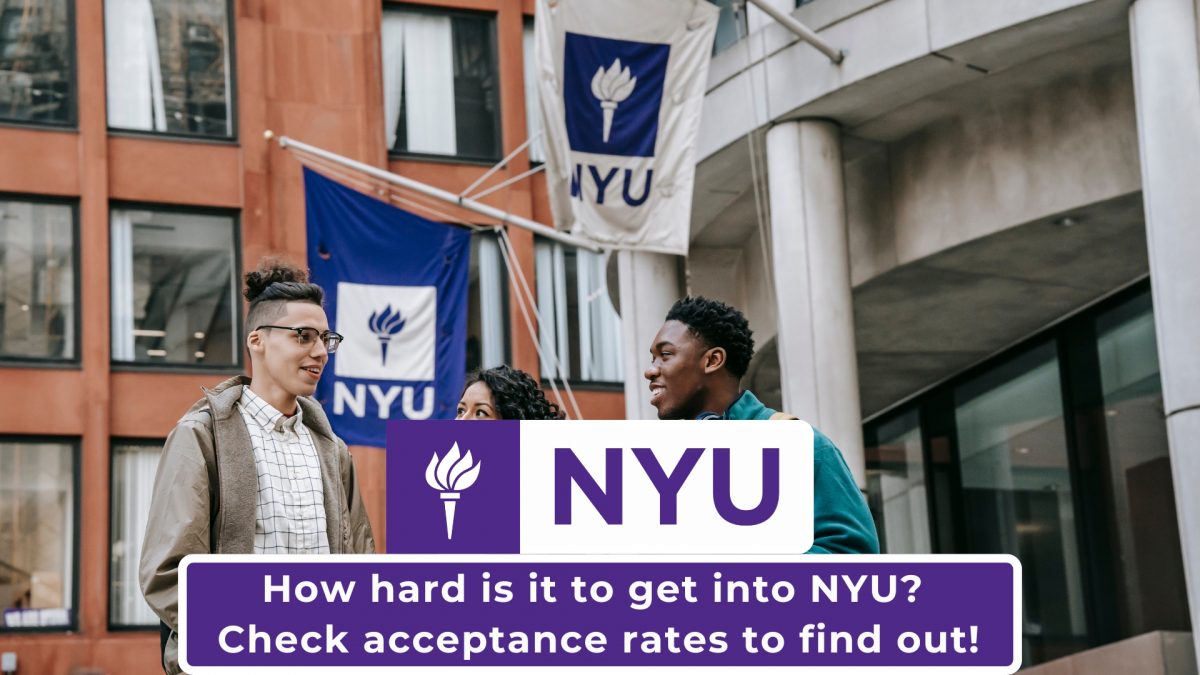
If you’re applying to New York University, the numbers alone should tell you something important: over 120,000 students competed for a spot in the Class of 2029, and only 7.7% got in. That’s not a typo. NYU is now one of the most selective private universities in the United States — and it keeps getting harder to crack.
Whether you’re a high school junior starting your college list or a senior strategising your application, here’s everything you actually need to know about NYU’s acceptance rates, by school and by year.
If you’re exploring higher education opportunities in America, our Life in USA: A Guide for Indian Students explains what studying and living in the US is really like.
Table of Contents
The overall NYU acceptance rate of the 2029 class
New York University sent offers of admission to just 7.7% of the more than 120,000 students who applied to become members of the Class of 2029’s entering undergraduate class, making it one of the most selective classes in NYU’s history.
To put that in perspective: over the past 10 years, applications to NYU have more than doubled. The applicant pool that felt enormous in 2015 is now twice that size, and spots haven’t expanded nearly as fast.
The total number of applicants represents a 3% increase over the prior year and is believed to be the highest number of applications received by any private US university. NYU isn’t just selective. It’s in a category of its own for application volume.
Want to be among the top 7% at NYU?
Get expert support for application strategy, essays, recommendations, test preparation, and visa guidance.
Acceptance rates by school
The 7.7% overall figure actually masks how much harder certain programs are. Three of NYU’s undergraduate schools are even more competitive than the university average.
Three of NYU’s undergraduate colleges — the College of Arts and Science, the Leonard N. Stern School of Business, and the Rory Meyers College of Nursing — offered admission to fewer than 5% of applicants.
- NYU Stern School of Business is a particularly striking case. The school receives approximately 21,900 applications for just 630 available spots. That’s a program enrollment of around 2,900 students total, with a fraction admitted each year.
- NYU Grossman School of Medicine operates at a completely different level of selectivity. Out of 8,271 applicants, 821 were interviewed, 208 were accepted — an acceptance rate of 2.50% — and 106 matriculated. The incoming class had a median MCAT score of 523 and a median undergraduate GPA of 3.98.
Acceptance rates are only one factor when evaluating universities. Before finalising your shortlist, learn how to Choose the Right University for Your Study Abroad Experience by considering academics, career outcomes, location, and campus culture.

How NYU’s acceptance rate has changed over time
The trend is one direction: down. Here’s a quick picture of where NYU has been in recent years, all sourced from NYU’s own announcements:
- Class of 2024 (2020): 15% — a record low at the time
- Class of 2026 (2022): ~12%
- Class of 2027 (2023): 8% — another record
- Class of 2028 (2024): 8%
- Class of 2029 (2025): 7.7% — the most selective class in NYU history
NYU has seen steady increases in selectivity over multiple years. What was once considered an ambitious reach school has quietly become one of the hardest universities to gain admission to in the country.
Acceptance rate is only one measure of selectivity. Understanding university rankings can provide additional context when comparing institutions. Read our guide on Ranking Systems of Foreign Universities.
Early Decision: your best strategic lever
If NYU is your top choice, applying Early Decision matters more than ever. NYU set a new record for the largest early decision applicant pool in history for the Class of 2029, with more than 25,000 applications — a 10% increase from the prior year.
Early Decision is binding, meaning you commit to attending if accepted. But it signals genuine first-choice interest to admissions committees, and historically ED acceptance rates at selective universities run meaningfully higher than regular decision rates. If NYU is where you want to be, don’t save it as a backup round-two strategy.
Early Decision is just one part of the broader US undergraduate admissions process. Our Step-by-Step Guide for UG Admissions in US explains application timelines, essays, recommendations, and admissions rounds in detail.
Who actually gets in?
The admitted Class of 2027 was expected to have no racial or ethnic majority, with almost 26% identifying as American Indian/Alaskan Native, Native Hawaiian or Other Pacific Islander, Black/African American, or Hispanic. 19% identified as first in their families to attend college, and 20% were Pell Grant recipients.
NYU anticipates that approximately 20% of the Class of 2029 will be Pell Grant recipients and 20% will be first-generation students — a consistent signal that the university takes access seriously alongside selectivity.
NYU also supports admitted students with financial need through the NYU Promise. Families with incomes of less than $100,000 will not have to pay tuition under this initiative, making the school more accessible than the sticker price suggests.
For academic benchmarks, the Class of 2027 had a median SAT score of 1540. These aren’t requirements, but they give you a calibration point.
Academic scores alone rarely secure admission at highly selective universities. Strong personal essays often play a major role in distinguishing applicants. Learn more in our guide to The College Admission Essay.
How to Apply to NYU: Requirements and Deadlines
Knowing the numbers is one thing. Understanding exactly what NYU needs from you is another. Here’s a clear breakdown of what the application actually involves.
How to apply
- NYU requires all first-year applicants to use the Common Application. You’ll select your campus — New York, Abu Dhabi, or Shanghai — and your program of interest on the NYU-specific section of the Common App.
- NYU offers three application rounds:
- Early Decision I (November 1)
- Early Decision II (January 1)
- Regular Decision (January 5).
Early Decision rounds are binding. If accepted, you must enrol and withdraw all other applications.
What you need to submit
The application requires contact details for at least one recommender. NYU requires one letter of recommendation from a teacher, counsellor, coach, supervisor, or anyone in a position of authority. There is also a non-refundable $85 application fee, though fee waivers are available for students who cannot afford it.
Beyond the basics, here’s what the full application includes:
- Academic transcripts. You must submit transcripts from all high schools attended. Unofficial transcripts are accepted for the initial application; official final transcripts are required if you’re admitted. If your documents aren’t in English, include an official translation.
- Standardised tests. NYU follows a test-optional policy. However, submitting competitive scores can strengthen your application. The middle 50% of admitted students score between 1450 and 1570 on the SAT and 32 to 35 on the ACT.
- Essays. The Common Application personal statement is required, along with NYU-specific supplemental essays focused on your academic interests, career goals, and reasons for choosing NYU. Strong supplements reference specific courses, research opportunities, or faculty whose work aligns with your interests — not just generic praise for the university.
- Extracurriculars. NYU considers involvement in clubs, leadership roles, sports, volunteer work, internships, and research. A strong extracurricular profile contributes meaningfully to your application.
- English proficiency (for international students). International applicants are generally required to demonstrate English proficiency. The minimum IELTS score is typically 7.0, though this can vary by program. NYU accepts results from over 100 US and international examinations to fulfil this requirement.
A note on finances. NYU is need-aware for international students, meaning financial need may factor into admission decisions. If you’re applying Early Decision, evaluate financial fit carefully before committing to a binding round.
When you’ll hear back
If you apply ED I, decisions are released by December 15. ED II decisions follow in mid-February, and Regular Decision notifications go out in late March.
What acceptance rates mean for your application strategy
The acceptance rate tells you how selective NYU is. It doesn’t tell you what actually gets people in. A few practical takeaways:
- Apply Early Decision if it’s your first choice. The ED pool is record-large, but the commitment still matters to admissions readers. Don’t wait.
- Know your program’s rate, not just the university’s. If you’re applying to CAS, Stern, or Nursing, your real acceptance rate is below 5% — plan your list accordingly.
- The NYU Promise changes the financial calculus. If your family earns under $100K, run the real numbers before assuming NYU is out of reach financially.
- Build a balanced list. Even a stellar candidate has odds below 8% at NYU. Apply to schools across the selectivity spectrum.
With an acceptance rate below 8%, NYU should typically be considered a reach university for most applicants. Building a balanced list of universities is essential for application success.

Recommended Reads
- How Not to Write Your College Essay
- Top 10 Best Countries to Study Abroad for Indian Students
- Checklist of Documents Required to Study Abroad 2026
- Scholarship Opportunities for International Universities
- Harvard University Acceptance Rate (Class of 2029)
FAQs
What is the NYU acceptance rate for 2025?
NYU accepted 7.7% of applicants for the Class of 2029 from a pool of more than 120,000 students — the most selective class in the university’s history.
Is NYU harder to get into than Ivy League schools?
NYU’s 7.7% acceptance rate now sits in a range comparable to several Ivy League programs, though Ivies remain broadly more selective. That said, individual NYU programs like Grossman Med School (2.5%) rival the most selective programs anywhere.
What GPA and SAT do you need for NYU?
NYU doesn’t publish minimum requirements. The Class of 2027 had a median SAT of 1540. For Grossman School of Medicine, the median undergraduate GPA was 3.98 and median MCAT was 523.
Does Early Decision improve your chances at NYU?
Yes, historically, Early Decision applicants have stronger odds. NYU received over 25,000 ED applications for the Class of 2029 — a record — confirming this is the path most serious applicants take.
What schools at NYU are hardest to get into?
CAS, Stern (Business), and Rory Meyers College of Nursing all accepted fewer than 5% of applicants. NYU Grossman School of Medicine is the most selective at 2.5%.
Does NYU offer financial aid that offsets selectivity?
Yes. Through the NYU Promise, families earning under $100,000 pay no tuition. NYU distributes over $1 billion in financial aid annually.